Why Tarot Feels So Accurate
Have you ever wondered why tarot readings often feel surprisingly personal and accurate? The answer lies not in mystical fortune-telling, but in fascinating psychological principles that have been studied for over a century.
The Barnum Effect
The Barnum effect, named after showman P.T. Barnum, describes our tendency to accept vague, general descriptions as uniquely applicable to ourselves. When a tarot reader speaks of "a recent struggle that has left you weary but stronger," they're describing a universal human experience—yet it feels specifically tailored to you.
This psychological phenomenon works because tarot interpretations often contain statements that:
- Apply to almost everyone
- Are phrased in a way that makes them feel personal
- Contain both positive and negative elements, making them seem balanced and insightful
Jungian Archetypes
Carl Jung, the founder of analytical psychology, viewed tarot cards as containing universal archetypes—primordial images and symbols that reside in the collective unconscious. These archetypes represent fundamental human experiences and patterns.
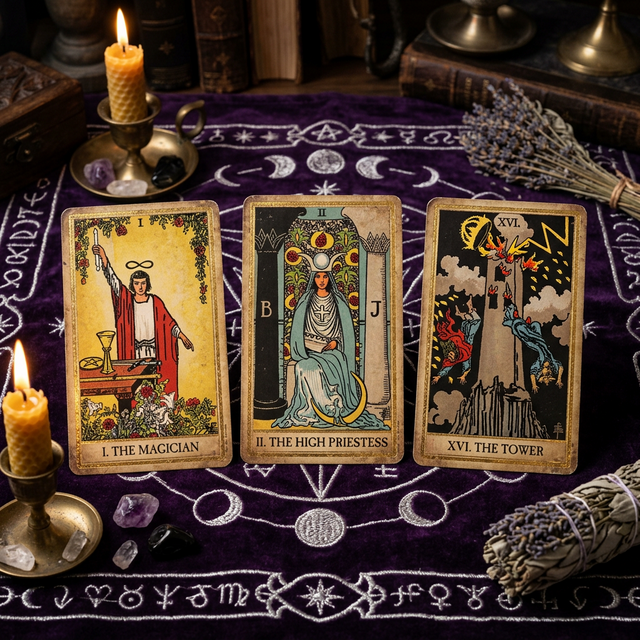
Jung identified several key archetypes that appear repeatedly in tarot:
- The Magician: The power of transformation and conscious action
- The High Priestess: Intuition, mystery, and hidden knowledge
- The Tower: Sudden upheaval and revelation
When we engage with tarot, we're not predicting the future—we're tapping into these universal patterns and using them as tools for self-reflection and psychological insight.
Projective Psychology
Tarot readings work similarly to the famous Rorschach inkblot test. The cards serve as projective tools—ambiguous images that you project your own thoughts, feelings, and experiences onto. The reader's interpretation then reflects back what you already know, subconsciously, about your situation.
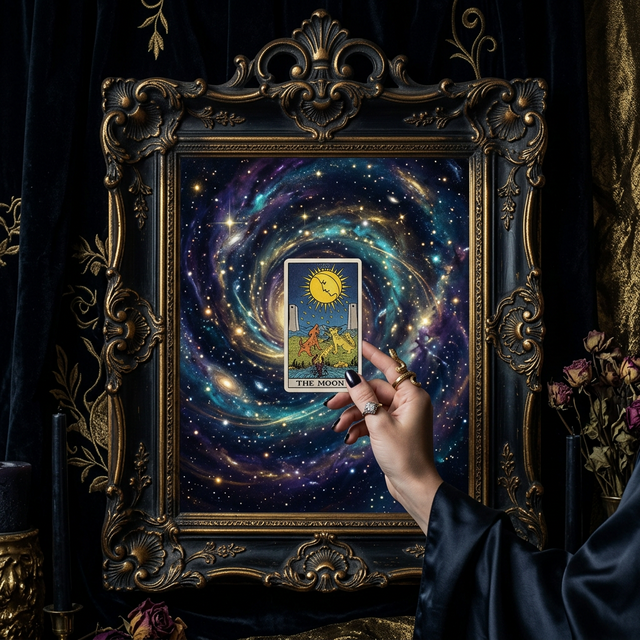
The real magic of tarot lies not in predicting fate, but in illuminating the paths you already sense are available to you.
Using Tarot for Self-Discovery
When approached with psychological understanding rather than literal fortune-telling, tarot becomes a powerful tool for:
- Clarifying confusing emotions
- Exploring different perspectives on a situation
- Accessing intuitive knowledge
- Identifying patterns in your life and relationships
The cards do not show you what will happen—they show you what is already happening, if you could only see it.
The true power of tarot lies not in supernatural prediction, but in its ability to serve as a mirror for self-reflection, helping you access wisdom you already possess but may have difficulty accessing directly.