Page of Swords
Page of Swords
mental curiositynew ideasintellectual awakeninglearningdiscovery

Page of Swords

Page of Swords
Page of Swords

Minor Arcana

Page of swords tarot meaning stands as the first Court card of the Swords suit, representing the pure emergence of new mental energy before it has been tested, refined, or tempered by experience. Where the Knight rushes into action, the Queen wields wisdom, and the King commands authority, the Page represents the moment before momentum builds—the first flicker of insight that has not yet become a fully-formed thought or belief. This card captures the quality of beginner's mind: openness, curiosity, and the willingness to think in new ways before old patterns have a chance to complicate them.

The Page represents new thought in its purest form—clear, fresh, uncomplicated.

In Tarot Arbak, Page of Swords represents consciousness awakening to new possibilities—the moment when mental energy emerges from the unconscious and becomes available to conscious awareness. This is not about mastery, achievement, or even understanding; it is about discovery, exploration, and the excitement of not-yet-knowing. The Page asks: Are you willing to think in new ways? Are you open to having your assumptions questioned? Can you approach life with curiosity rather than certainty? This card does not promise that the new ideas are correct or complete; it only promises that they are emerging, and that you have the opportunity to engage with them.

The Page as a court card represents the student, the messenger, the beginner in the realm of intellect and communication. Unlike the numbered cards that describe specific situations, Pages represent qualities of mind and energy that characterize how we approach new information. Page of Swords specifically embodies quick thinking, mental curiosity, and the desire to learn and explore. The number 1 implicit in the Page (as the first court card) marks this as the beginning phase of intellectual development—the seed before the tree, the spark before the fire, the idea before the belief system.

Page of Swords Symbolism

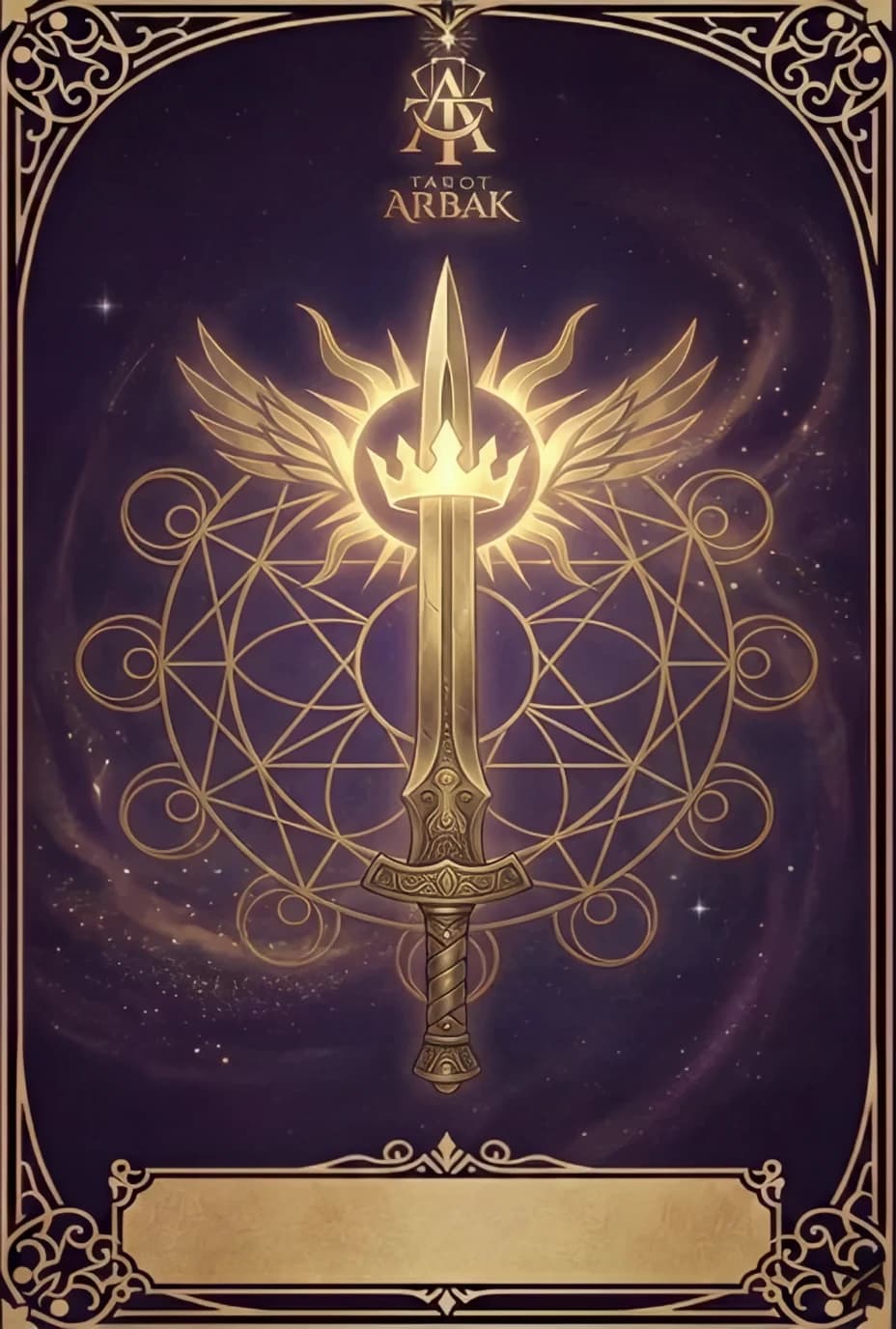
Page of swords tarot meaning reveals itself through deceptively simple visual composition that captures the profound moment when new mental energy first emerges. Every element shifts between the clarity of the sword itself and the swirling activity of exploration that surrounds it. Understanding these symbols is key to mastering the card's message about intellectual awakening and the joy of discovery.

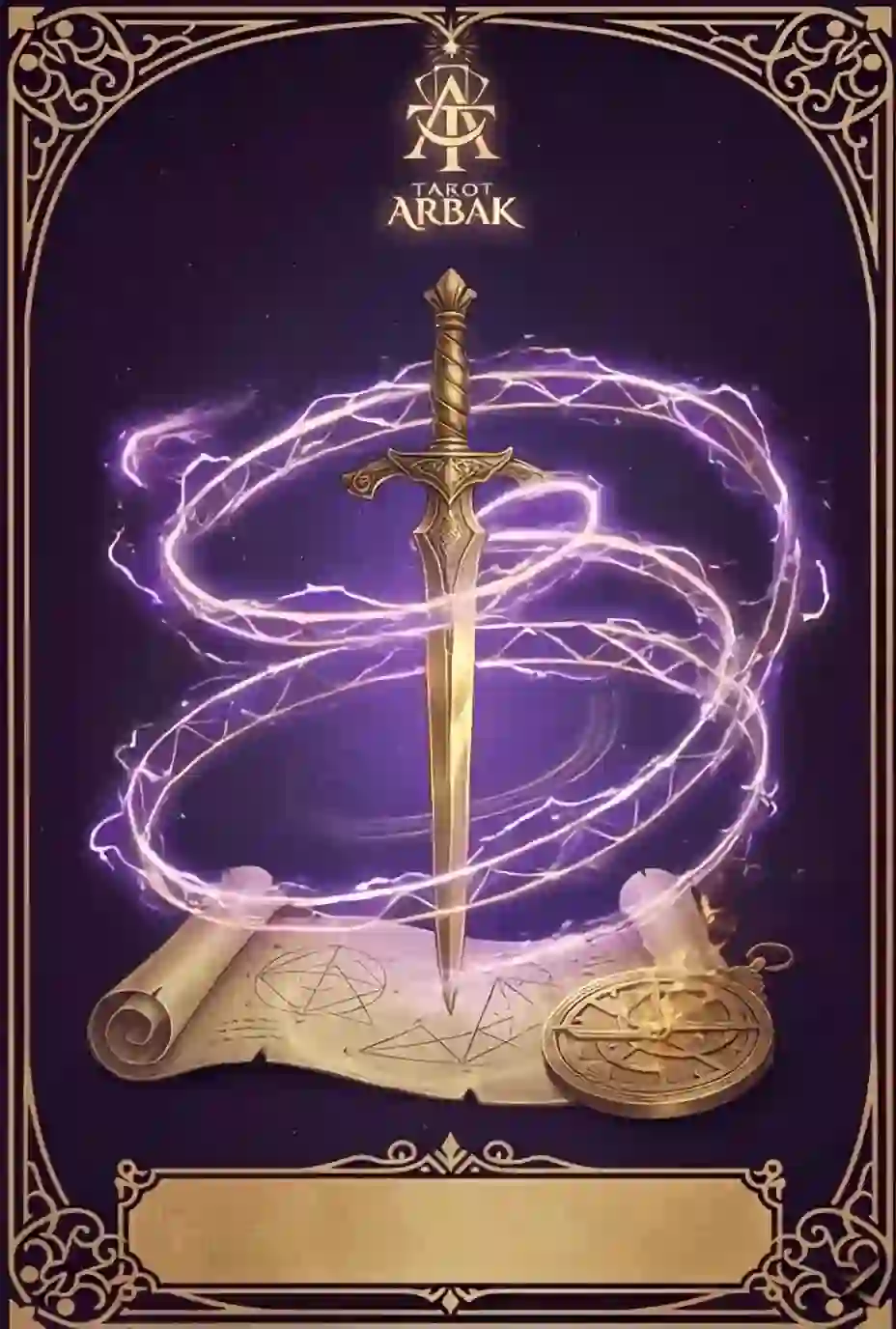
Tarot Arbak's Page of Swords is structurally precise yet rich with implications about how consciousness generates new ideas. The single sword stands at the center, surrounded by spiral energy patterns that suggest active mental exploration. Below, open text and geometric drawings indicate learning in progress. Here is the blueprint for understanding how new thoughts emerge from the unconscious and become available to conscious awareness.

Unlike traditional representations that feature a young prince holding a sword with wind blowing their cape and hair, Tarot Arbak's Page of Swords presents the essence of new mental energy itself—the raw impulse of curiosity, the kinetic energy of discovery, and the excitement of not-yet-knowing. This abstraction teaches that new thought is not a personal possession but a universal phenomenon of consciousness that occurs whenever mind encounters the unknown. The absence of a human figure emphasizes that intellectual awakening is not tied to youth but to the quality of openness itself.

Single Vertical Sword: New Mental Energy

The single sword standing vertically at the card's center represents a new idea or mental impulse that has just emerged from consciousness. Unlike multiple swords (which would indicate complex mental structures) or sheathed swords (which would suggest dormant potential), this single unsheathed blade represents active, available mental energy. The vertical orientation suggests alignment and focus—this new thought is clear, not yet muddied by overthinking or complication. The sword stands alone because this idea is new; it has not yet been integrated into larger belief systems or connected to other thoughts. It is the seed of a new mental pattern in its purest form.

This central sword embodies the clarity of new thinking before old patterns have had a chance to complicate it. When a thought first emerges, it arrives whole and sharp—it has not yet been distorted by doubt, confused by contradictory beliefs, or weakened by the habit of second-guessing. The sword's vertical position indicates that this new mental energy is aligned, purposeful, and ready to grow. The Page of Swords teaches that the moment of emergence is precious—this is when thinking is at its freshest, most direct, most alive with possibility.

The sword is whole, sharp, and clear—new thinking before complications.

This solitary blade suggests that new ideas initially stand alone. They have not yet been woven into the fabric of existing beliefs, connected to other thoughts, or integrated into your identity. This isolation is both a vulnerability and a strength—the vulnerability of not yet having support from established understanding, and the strength of being free from the distortion of old patterns. Page of Swords reminds us that new thoughts need space to stand alone before they can be connected to anything else. Give your new ideas this space of isolation before you try to integrate them with what you already believe.

Spiral Energy Pattern: Mental Activity and Curiosity

The spiral energy pattern surrounding the sword represents the mental activity, curiosity, and exploratory thinking that new ideas generate. When we encounter something new, we don't simply absorb it passively. We circle around it, examine it from multiple angles, test it, question it. The spiral suggests nonlinear, exploratory thinking—the kind of mental play that happens when we're genuinely curious. Unlike linear thinking (which moves directly from point A to point B), spiral thinking returns to the new idea repeatedly, each time from a slightly different perspective, gradually deepening understanding.

This spiral embodies the process of learning and discovery. Genuine intellectual exploration is not a straight line to a final conclusion but a spiraling process that circles around new information, approaching it from different angles, gradually building understanding. The spiral indicates that when new mental energy emerges, it generates its own momentum—curiosity begets more curiosity, questions lead to more questions, each cycle of exploration bringing deeper insight. Page of Swords teaches that the excitement of discovery creates its own energy field, drawing the mind into deeper engagement with new ideas.

The surrounding spiral suggests that new thinking is not static but kinetic. When a genuinely new idea enters consciousness, it doesn't sit quietly; it activates the mind, generates questions, stimulates imagination. This mental momentum is what the Page of Swords captures—not the settled wisdom of the Queen or the authoritative knowledge of the King, but the restless, eager energy of discovery. The spiral represents the joy of not-yet-knowing, the excitement that comes with having your mind opened to fresh possibilities. Page of Swords reminds us that this state of active exploration is valuable in itself, not merely as a means to an end.

Open Text and Geometric Drawings: Learning in Progress

The open text and geometric drawings below the sword represent active learning and the process of working with new information. These are not finished, polished documents but notes, sketches, and diagrams in progress. They convey that the Page of Swords is not merely about receiving new information but actively engaging with it—taking notes, making connections, attempting to map and understand the structure of what you're discovering. The text suggests you are writing your own understanding, not merely accepting someone else's. The geometric drawings indicate analytical thinking—the attempt to impose order and structure on new knowledge.

This visual element embodies the student energy of the Page—the active engagement with learning that characterizes the beginner phase. When we genuinely explore new ideas, we don't simply absorb them; we work with them, experiment with them, try to understand their structure and implications. The open text suggests this process of working things out through writing, while the geometric drawings indicate analytical mapping and structuring. Page of Swords teaches that learning is an active process of engagement, not passive reception.

Understanding develops through active engagement, not passive reception.

The explicitly incomplete nature of these documents signifies that the Page represents the beginning, not the completion, of an intellectual journey. The Page of Swords is not about mastery or expertise—it is about being a student, a beginner, someone in the early stages of learning. The unfinished documents convey that understanding is still developing, conclusions have not been reached, and the learning process is ongoing. This incompleteness is not a flaw but a feature—the Page of Swords celebrates the joy of not yet knowing, the excitement of discovery, and the humility of beginner's mind.

Sharp, Unadorned Form: Clarity of New Thinking

The sword's sharp, clean, simple form represents the clarity and precision of new thinking before it has been complicated by doubt, overthinking, or the accumulation of mental habits. This is thinking in its purest form—direct, incisive, clear. The sword is not ornate, decorated, or encrusted with the patina of age. It is fresh, new, uncomplicated. This clarity represents the gift of beginner's mind: the ability to see directly without the distortion of preconceptions. The Page of Swords asks: Can you think this clearly? Can you perceive without filtering everything through what you already believe?

This unadorned form embodies the freshness of new mental energy before the weight of past experience. When we think about familiar topics, our thoughts are inevitably colored by everything we've learned about them in the past—by past conclusions, past assumptions, past associations. But new thinking, when it first emerges, is free from this weight. It arrives direct, unmediated, clear. The Page of Swords captures this precious moment before old patterns have a chance to complicate the new idea. The sword's simple form suggests that new thinking, at its essence, is straightforward—it becomes complicated only through our own additions.

This visual quality teaches that new ideas possess a natural clarity that we can recognize when we're open to it. The sharpness of the blade represents the incisive quality of new insight—the way it can cut through confusion and reveal truth directly. Page of Swords reminds us that new thinking has its own inherent clarity, a sharpness that comes from freshness rather than complexity. The more we complicate new ideas with our old patterns, the more we obscure this natural clarity. The Page asks us to appreciate and protect the directness of new thinking before we burden it with the weight of our existing beliefs.

Absence of Human Figure: Universal Mental Energy

The absence of a young prince figure emphasizes that new mental energy is not tied to chronological age but to the quality of openness. By removing the human figure found in Rider-Waite versions, Tarot Arbak universalizes the Page of Swords from a story about a specific person to a meditation on the nature of new thought itself. The card is not merely about youth, messengers, or students—it is about moments in every consciousness when new thinking emerges. Whether you are sixteen or sixty, the Page of Swords appears when you are beginning to think in new ways, question old assumptions, and open yourself to fresh perspectives.

This abstraction embodies the archetypal nature of intellectual awakening. The emergence of new mental energy is not something that happens only to the young; it is a capacity of consciousness that remains available throughout life. When we cultivate openness, curiosity, and willingness to learn, we remain capable of Page energy regardless of our chronological age. The absence of a figure invites us to identify not with a person but with the process of intellectual awakening itself. New thought is not something you have but something that happens to you when conditions of openness are present.

New mental energy is not about age but about openness.

This absence teaches that the Page represents a quality of mind rather than a life stage. We can approach new situations with beginner's mind, regardless of how much experience we have. We can cultivate curiosity and openness even when we are experts in a field. The Page of Swords reminds us that the capacity for new thinking is not lost with age but only abandoned through closed-mindedness. The archetype of new mental energy is available to anyone who is willing to think freshly, to question assumptions, and to remain curious regardless of accumulated knowledge.

  • single vertical sword at center
  • spiral energy pattern surrounding sword
  • open text and geometric drawings
  • sharp, unadorned sword form
  • absence of human figure

UPRIGHT MEANINGS

General

When drawn upright, the Page of Swords represents the emergence of new mental energy, curiosity, and the beginning of intellectual exploration. You are entering a period of learning, discovery, or fresh thinking. Unlike the certainty of King energy or the mastery of Queen energy, the Page represents the excitement of not-yet-knowing, the joy of discovery, and the openness of beginner's mind. The card asks: Are you willing to think in new ways? Are you open to having your assumptions challenged? Can you approach your current situation with curiosity rather than certainty?

New mental energy brings the excitement of discovery.

This position suggests that you may be encountering new information that challenges your existing beliefs, beginning a course of study, or simply feeling the spark of intellectual excitement that comes with discovering something new. The Page of Swords arrives when you are entering a period of mental awakening, curiosity, or learning. This card asks you to cultivate beginner's mind—the quality of openness that allows us to receive new ideas without immediately filtering them through what we already believe. The Page does not promise that the new ideas are correct or complete; it only promises that they are emerging, and that you have the opportunity to engage with them.

Love

In love readings, the upright Page of Swords often signifies new mental energy in relationships. For singles, this may indicate a new connection characterized by intellectual excitement, lots of conversation, and the joy of discovery. You might meet someone who stimulates your mind, with whom conversation flows easily and naturally. The Page of Swords suggests that the connection is in its beginning, exploratory phase—you are getting to know each other, discovering compatibility, enjoying the excitement of new possibilities.

For those in relationships, this card can suggest a period of renewed curiosity about your partner. You may be learning new things about each other, bringing fresh perspectives into the relationship, or having conversations that open new understanding. The Page of Swords invites you to approach your relationship with beginner's mind rather than assuming you already know everything about your partner. Even long-term relationships can benefit from renewed curiosity and the willingness to see each other fresh. The card reminds us that intellectual stimulation and the excitement of discovery keep relationships alive.

Career

In career readings, the upright Page of Swords often signifies new learning, skill development, or intellectual exploration. You may be beginning a course of study, starting a new job that requires lots of learning, or encountering new ideas that challenge your professional understanding. The card can indicate a message about work—a job offer, interview request, or important information about a position. The Page of Swords suggests approaching your career with curiosity rather than certainty—being willing to learn, ask questions, and think in new ways.

This position may also indicate that you are in a student phase professionally. Even if you have experience, you are being asked to learn new approaches, acquire new skills, or understand new areas of your field. The Page of Swords honors this energy of being a beginner—it reminds us that the willingness to learn, regardless of how much we already know, is what keeps our professional growth alive. The card encourages you to embrace the learning phase rather than rushing to mastery. Enjoy the exploration; expertise will come in time.

Spiritual

In spiritual readings, the upright Page of Swords represents intellectual awakening in your spiritual journey. You may be encountering new ideas, teachings, or perspectives that challenge your existing understanding of spirituality. This could mean studying new spiritual traditions, exploring philosophical questions, or engaging with concepts that open your mind to fresh possibilities. The Page of Swords suggests approaching spiritual exploration with curiosity and open-mindedness rather than rigid certainty.

This card may also indicate that you are in a beginning phase of spiritual learning—you are gathering information, exploring different approaches, asking questions that haven't yet led to answers. The Page of Swords reminds us that this exploratory phase is valuable in itself. Spiritual growth requires the openness of beginner's mind, the willingness to have assumptions challenged, and the excitement of discovery. The card encourages you not to rush toward certainty or final conclusions but to enjoy the process of spiritual exploration. Keep questioning, keep learning, remain open to new perspectives.

REVERSED MEANINGS

General

When reversed, the Page of Swords can indicate several shadow expressions of new mental energy. It may suggest mental restlessness—jumping from one idea to another without depth, inability to focus, superficial understanding. You may be skimming the surface of many topics without really understanding any of them, or feeling mentally overwhelmed by too much information and too little depth. The card asks: Where are you rushing when you should be slowing down to really learn? Where are you skimming when you should be diving deep?

Scattered thinking prevents genuine learning.

This reversal can also indicate gossip, rumors, and irresponsible communication. You may be spreading information without verifying it, speaking without thinking, or engaging in conversations that create more confusion than clarity. The card warns: Your words have consequences. Think before you speak. Verify before you share. Alternatively, the reversed Page can indicate resistance to new learning—closed-mindedness, defensiveness about beliefs, or the refusal to consider perspectives that challenge your assumptions. The card asks: What have you concluded that you should still be questioning?

Love

In reversed love readings, the Page of Swords may indicate superficial interest without depth of connection. A new connection might be characterized by lots of talking but little genuine understanding, or by excitement that doesn't develop into deeper intimacy. For singles, this can suggest that you are collecting potential partners without really getting to know anyone, or that you are attracted to intellectual novelty rather than genuine connection.

For those in relationships, this reversal can indicate gossip, miscommunication, or shallow engagement. You might be talking about your relationship with others instead of having honest conversations with your partner. The reversed Page can suggest that curiosity about each other has been replaced by assumption, or that you are no longer making the effort to discover new things about your partner. The card asks: Are you keeping your connection alive through genuine curiosity, or has it become stale through assumption and routine?

Career

In reversed career readings, the Page of Swords can indicate rushing through learning without real understanding. You may be skimming information, jumping from one skill to another without developing depth, or presenting superficial knowledge as if it were expertise. This position can also indicate gossip at work—spreading rumors, sharing unverified information, or engaging in conversations that create more confusion than clarity.

Alternatively, the reversed Page may indicate closed-mindedness about new methods or ideas. You might be resisting new approaches because they require you to be a beginner again, or you might be clinging to familiar ways even when they no longer serve you. The card asks: Where are you refusing to learn because you don't want to feel like a beginner? Where has your professional growth stagnated because you've closed yourself to new perspectives?

Spiritual

In reversed spiritual readings, the Page of Swords can indicate scattering your mental energy across too many practices or traditions without going deep into any. You might be reading many books but integrating none, sampling many teachings but practicing none, or collecting spiritual concepts without actually living them. The card warns that superficial engagement with spirituality prevents genuine transformation.

This reversal can also indicate closed-mindedness about spiritual perspectives that challenge your existing beliefs. You might be defending familiar spiritual positions instead of remaining open to new understanding, or you might be rejecting teachings because they require you to think in new ways. The Page of Swords reversed asks: Are you approaching your spiritual journey with curiosity or with defensiveness? Are you willing to question your own spiritual assumptions, or have they become rigid beliefs that you protect rather than explore?

Frequently Asked Questions

Related Cards