The Hanged Man
✦ Major Arcana ✦
The hanged man tarot card meaning embodies the paradoxical wisdom that comes when consciousness chooses suspension over action, stillness over progress, and inverted perspective over conventional viewing. As the twelfth card of the Major Arcana, The Hanged Man represents not punishment or victimhood but the voluntary surrender of control to access truth that remains invisible to those who refuse to stop.
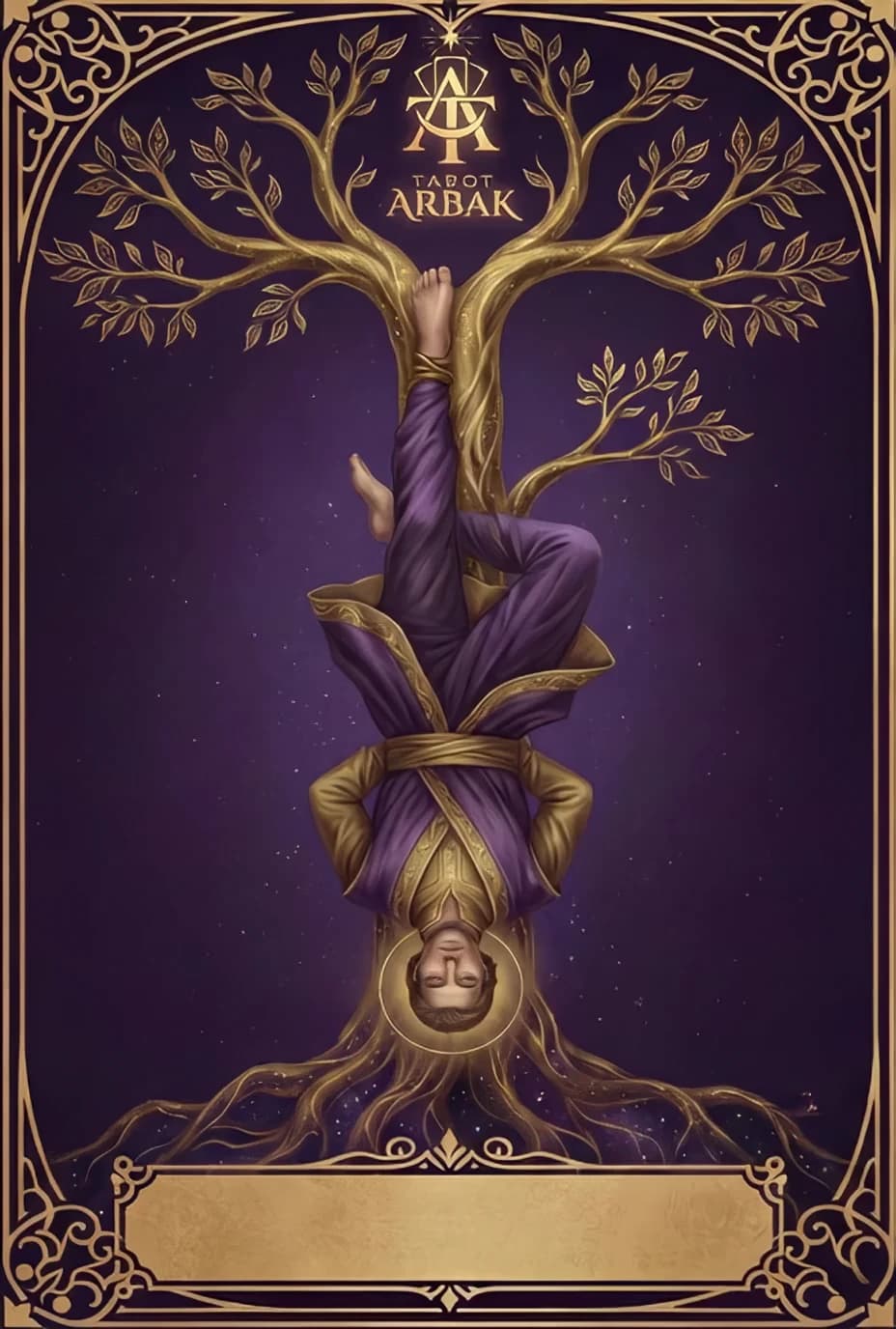
In Tarot Arbak's psychologically rigorous interpretation, The Hanged Man is stripped of its traditional associations with martyrdom and suffering. The figure hangs from a living tree—branches spreading above, roots reaching below—suspended between two realms of existence. This is not ceasing to live but choosing to pause. The halo around the figure's head glows not from agony but from awareness. The arms appear bound not from constraint but from the choice to remain still.
When exploring what does the hanged man tarot card mean, you must confront the card's central teaching: you cannot understand by looking in the same direction. Progress requires stopping. Understanding requires letting go. Wisdom emerges not through action but through the deliberate suspension of action. The Hanged Man does not wait—he chooses to see differently.
Whether you are seeking the hanged man tarot advice on when to stop pushing, or questioning the hanged man tarot career stagnation, the message cuts through assumption: Some truths become visible only when you turn your perspective upside down. The dark, empty background teaches that time itself has been suspended—neither past nor future operates here. This is the eternal present where understanding dawns.
The Hanged Man Symbolism
To master the hanged man tarot card meaning, one must understand not what the figure sees but how the figure chooses to see. Tarot Arbak's interpretation emphasizes voluntary inversion over forced suspension.
The Inverted Figure: Choosing to See Differently
The figure hangs upside down from one foot, the other leg bent to form a cross shape. In Rider-Waite tradition, this posture represents sacrifice and martyrdom. In Tarot Arbak, this posture represents the deliberate choice to invert perspective.
This is not punishment imposed from outside—it is suspension chosen from within. The figure does not struggle to escape because escape is not the goal. The goal is seeing what cannot be seen from upright positions. When you stand normally, you see the world as ego expects. When you invert, the familiar becomes strange and the strange becomes revelation.
You cannot understand by looking in the same direction. Inversion is not loss—it is access.
The Living Tree: Roots Below, Branches Above
In Rider-Waite, the figure hangs from a wooden structure. In Tarot Arbak, the figure hangs from a living tree with visible roots and branches. The branches spread upward toward sky; the roots reach downward toward earth. The figure suspends between these two realms.
This teaches that the Hanged Man has not severed connection with life—he has deepened it. The tree is alive, growing, rooted. The suspension happens within living systems, not apart from them. The roots draw nourishment from below while branches reach toward above. The inverted figure accesses both simultaneously.
The living tree also emphasizes that this suspension is natural—not artificial or imposed. Trees grow both up and down. The figure who hangs between these directions participates in the tree's double nature, accessing wisdom that flows in both directions at once.
The Halo: Awareness, Not Agony
The halo around the figure's head glows with soft, inward light. In Rider-Waite, this halo represents spiritual enlightenment earned through sacrifice. In Tarot Arbak, the halo represents awareness that arises when struggling ceases.
The light is softer, more internal, than traditional depictions. This teaches that enlightenment here is not announced but contained. The Hanged Man does not display his wisdom—he embodies it. The glow does not illuminate the darkness around him; it illuminates his own inverted consciousness.
This is crucial: the halo proves that suffering is not the source of wisdom. Awareness is the source. The figure does not glow because he hurts; he glows because he understands. Pain is optional; insight is the point.
Bound Arms: Choosing Not to Act
The arms appear bound behind the figure's back. In traditional interpretation, this represents helplessness or constraint. In Tarot Arbak, this represents the voluntary choice to suspend action.
The figure is not trapped—he has chosen not to escape. The arms are bound not by external force but by internal decision. This teaches that true stillness is not passive but active: you must actively choose not to move, not to struggle, not to escape. The Hanged Man could free himself but recognizes that freedom lies in suspension, not escape.
He does not escape because he has chosen not to. Stillness is his method, not his prison.
Dark Empty Background: Time Suspended
The background is dark and empty—no landscape, no sky, no other figures. This abstraction teaches that time has been suspended. Neither past nor future operates here. Neither memory nor anticipation has power. Only the eternal present remains.
This suspension of time distinguishes The Hanged Man from cards about waiting or patience. Waiting implies expecting something to happen in time. The Hanged Man has stepped outside time entirely. The darkness is not ominous—it is the absence of temporal distraction. Without past or future clouding awareness, the present becomes fully visible.
The Cross-Legged Posture: Sacred Geometry
The bent leg forming a cross shape connects to sacred geometry and spiritual symbolism. In Tarot Arbak, this represents the integration of opposites through suspension. The vertical and horizontal meet in the figure's body. Above and below merge. Upright and inverted become one.
This geometric precision teaches that inversion is not chaos—it is ordered transformation. The figure's body becomes a symbol of paradox resolved: suspended yet stable, inverted yet aware, bound yet free.
The Central Message: Understanding Through Inversion
Every element builds toward a single teaching: You cannot understand by looking in the same direction.
The Hanged Man does not stop moving because he is stuck—he stops because stopping reveals what movement conceals. He does not invert because he fell—he inverts because some truths are visible only from below. He does not surrender because he lost—he surrenders because control blocks the wisdom he seeks.
The question The Hanged Man poses: What would you see if you stopped moving and turned your perspective upside down?
- Symbol 1
Inverted Figure: Choosing to see differently, not forced suspension.
- Symbol 2
Living Tree: Connection to life deepened, not severed; roots and branches both visible.
- Symbol 3
Halo: Awareness arising from stillness, not agony; inward light, not displayed wisdom.
- Symbol 4
Bound Arms: Voluntary choice not to act; stillness as method, not prison.
- Symbol 5
Dark Empty Background: Time suspended; neither past nor future operates.
- Symbol 6
Cross-Legged Posture: Sacred geometry integrating opposites through suspension.
- Symbol 7
Central Message: You cannot understand by looking in the same direction.
The Hanged Man as Feelings: The Perspective of Stillness
When querying the hanged man as feelings, prepare for an answer about the quality of perception rather than emotional intensity or romantic sentiment. The Hanged Man does not describe feelings of passion or connection—it describes the capacity to see from inverted perspective.
The Hanged Man as Feelings: Upright
If you want to know how someone feels about you, the upright Hanged Man indicates feelings characterized by stillness, suspended judgment, and the willingness to see from different perspective:
-
They feel suspended in observation: They are not rushing to conclusion about you or the connection. They have chosen to pause, to observe from inverted angle, to understand before deciding.
-
They feel willing to see differently: Their feelings toward you are not fixed or predetermined. They are actively suspending their usual patterns of perception to see you as you actually are.
-
They feel no urgency: They do not pressure for resolution or definition. The Hanged Man teaches that understanding takes time—specifically, suspended time where clock-time stops mattering.
-
They feel internally illuminated: Their awareness of you glows from within. They do not need to announce or display their feelings—their understanding is contained, personal, deep.
The Hanged Man as Feelings: Reversed
When drawn reversed, the hanged man as feelings reveals stuck perception, forced stillness, or avoidance disguised as pause:
-
They feel stuck rather than suspended: They are not choosing to pause—circumstances or fear have frozen them. The stillness produces no insight because it is imposed rather than chosen.
-
They feel unable to move forward: The inversion is not producing new understanding. They hang without purpose, trapped between options without the wisdom that should emerge from suspension.
-
They feel resentful about waiting: The pause has become prison. They want to move but cannot, want to decide but lack clarity. The Hanged Man's halo is absent—their stillness produces no light.
-
They feel avoidant: They may be using pause to escape necessary decisions or actions. The suspension serves fear rather than understanding, delay rather than depth.
The Hanged Man Tarot Advice: Stop to See, Invert to Understand
When seeking the hanged man tarot advice, the message is paradoxical and demanding: Stop moving to start seeing. Invert your perspective to understand what remains invisible from normal angles.
Specific advice by situation:
-
If you are pushing hard with no results: Stop. More effort will not produce more outcome. The Hanged Man appears precisely when conventional progress has reached its limit. Your solution lies not in pushing harder but in seeing differently. Suspend action. Invert perspective. Allow insight to emerge from stillness.
-
If you feel stuck or frozen: Examine whether your suspension is chosen or imposed. The Hanged Man's wisdom comes only from voluntary stillness. If circumstances have forced you to stop, the pause will produce resentment rather than insight. Can you choose what has been imposed? Can you find the sacred in the stuck?
-
If you cannot see a solution: The problem is not lack of solutions—it is the angle of viewing. What would you see if you turned the situation upside down? What becomes visible when you stop demanding progress and simply observe from below? The Hanged Man teaches that some truths reveal themselves only to inverted perception.
-
If you are using spiritual narratives to avoid action: The Hanged Man reversed calls this out. If your stillness produces no insight, you are not pausing for wisdom—you are hiding from life. True suspension transforms; false suspension merely delays.
The ultimate advice of The Hanged Man is this: You cannot understand by looking in the same direction. Wisdom requires inverted perspective. Insight requires suspended time. Choose your stillness deliberately, or it will be imposed upon you without the illumination it should bring.
UPRIGHT MEANINGS
General Meaning
The hanged man tarot card meaning in general readings signals that the time has come to stop moving and start seeing differently. You are being called not to wait but to choose suspension—deliberately inverting your perspective to access understanding that remains invisible to those who keep pushing forward.
This card appears when conventional progress has reached its limit. More effort will not produce more result. The Hanged Man teaches that some truths emerge only when action ceases, when time suspends, when you turn your worldview upside down and see what was always there but invisible from normal vantage.
The upright Hanged Man indicates that you are ready for this inversion. The ego has developed sufficient maturity to recognize that control often blocks rather than serves wisdom. You can choose stillness not as passivity but as method. You can suspend not because you are stuck but because you understand that stopping reveals what movement conceals.
You cannot understand by looking in the same direction. The Hanged Man does not wait—he sees differently.
The card also indicates that time has been suspended for you. Neither past nor future operates here. This is the eternal present where insight dawns. Use this suspended time deliberately: invert your assumptions, question your perspective, look from below what you usually view from above.
Love & Relationships
In romance, the hanged man tarot love meaning indicates a relationship seen from inverted perspective—not the passionate connection of new love but the deep understanding that comes from suspending judgment and seeing the other as they truly are.
If you're single: You may be in a period of suspended pursuit—not actively seeking but also not avoiding. This is not stagnation but deliberate pause. The Hanged Man suggests that new connection requires seeing love differently, letting go of old patterns and expectations, allowing perspective to invert so you recognize the right person when they appear.
If you're in a relationship: The partnership benefits from suspended time. This is not a period of dramatic change but of deepened understanding through stillness. The Hanged Man teaches that truly seeing your partner requires stopping the rush of daily life, inverting your assumptions about who they are, and observing from below what you usually view from above. Relationships often stagnate not because love fades but because seeing fades—we stop really looking. The Hanged Man restores sight through suspension.
The card also suggests that relationship wisdom may require sacrifice of ego demands. What would you see if you let go of needing the relationship to look a certain way? What truth becomes visible when you stop pushing for progress and simply observe?
Career & Money
When querying the hanged man tarot career implications, expect a message about strategic pause, inverted perspective on professional challenges, and the wisdom that emerges when pushing harder produces less results.
You may have reached a point where conventional effort no longer serves. More work produces less outcome. The Hanged Man appears to suggest that the solution is not more action but different seeing—inverting your perspective on the problem, suspending your usual approaches, allowing insight to emerge from stillness rather than force.
This is not a card of quitting or failure but of strategic suspension. The most successful professionals know when to stop pushing and start observing. The Hanged Man's inverted perspective reveals opportunities invisible to those trapped in horizontal thinking. What would you see if you stopped trying to solve the problem and simply observed it from below?
The card also suggests that professional wisdom may require sacrifice of conventional achievement metrics. What matters more than progress? What truth about your work becomes visible when you suspend the demand for constant forward movement?
REVERSED MEANINGS
General Meaning
The hanged man reversed signals that suspension has become stagnation, that stillness has become stuck-ness, or that the inversion produces no insight because it was imposed rather than chosen.
Forced Suspension: You may be stopped not by choice but by circumstance. The pause is not sacred—it is prison. The reversal indicates that your stillness serves no purpose because you did not choose it. Insight cannot emerge from resentment.
Stuck Perspective: The inversion is not producing new seeing. You hang upside down but see nothing new—only the same old patterns viewed from uncomfortable angle. The Hanged Man's halo is absent; your suspension produces no light.
Avoidance Disguised as Pause: You may be using spiritual narratives about waiting and stillness to escape necessary action or decision. The reversal calls this out: if your suspension produces no insight, you are not pausing for wisdom—you are hiding from life.
The reversal asks: Is your stillness chosen or imposed? Does stopping serve understanding or avoid action? The Hanged Man's wisdom emerges only from voluntary suspension—not from being stuck and calling it spiritual.
Love & Relationships
In love, The Hanged Man reversed indicates stuck relationship dynamics, forced pause that produces no understanding, or avoidance of necessary decisions through spiritual narratives about waiting.
Stuck Rather Than Suspended: The relationship has frozen, not deepened. Neither partner is choosing to pause—circumstances have trapped you in liminal state. The stillness produces resentment rather than insight.
No New Perspective: You may be viewing the relationship from inverted angle but seeing nothing new—only the same problems viewed uncomfortably. The Hanged Man's promise of different seeing has failed; the inversion produces no revelation.
Avoidance of Decision: One or both partners may be using pause to escape necessary choices about commitment, direction, or whether to continue. The reversal calls this out: if your waiting produces no clarity, you are not pausing for wisdom—you are avoiding life.
The reversal asks whether the relationship's stillness serves understanding or merely delays inevitable decisions.
Career & Money
Professionally, The Hanged Man reversed warns of stagnation that produces no insight, forced pause that serves no purpose, or avoidance of necessary action through spiritual narratives about strategic waiting.
Stagnation: Your career has frozen, not deepened. The pause is not revealing new opportunities—it is merely trapping you in inaction. The reversal indicates that stopping has become prison rather than portal.
No New Seeing: You may have inverted your perspective on professional challenges but discovered nothing new—only the same problems viewed from uncomfortable angle. The Hanged Man's promise of insight has failed.
Avoidance Disguised as Strategy: You may be using narratives about strategic pause to avoid necessary risks, decisions, or changes. The reversal calls this out: if your stillness produces no wisdom, you are not being strategic—you are being fearful.
The reversal asks whether your professional suspension serves understanding or merely delays necessary action.
Frequently Asked Questions
Maintain the Crystalline Infrastructure
Tarot Arbak exists beyond ads and algorithms. Your contribution ensures the permanence of the Logos.