Death
✦ Major Arcana ✦
Death tarot card meaning embodies the most misunderstood archetype in all tarot: not the end of life but the end of forms that cannot continue. Numbered 13 in Major Arcana, this card represents transformation through necessary ending—the impersonal threshold that opens when a cycle completes, regardless of your feelings about it.
The most common error is literal interpretation: fearing Death as prophecy of physical death or permanent loss. The actual teaching is far more precise: something within your life has reached its natural conclusion. What must end is not you but the form through which you have been expressing. Death does not kill; it illuminates what cannot continue. Death does not destroy; it opens the way for what must emerge.
Death does not say everything will end. Death says you cannot continue this way.
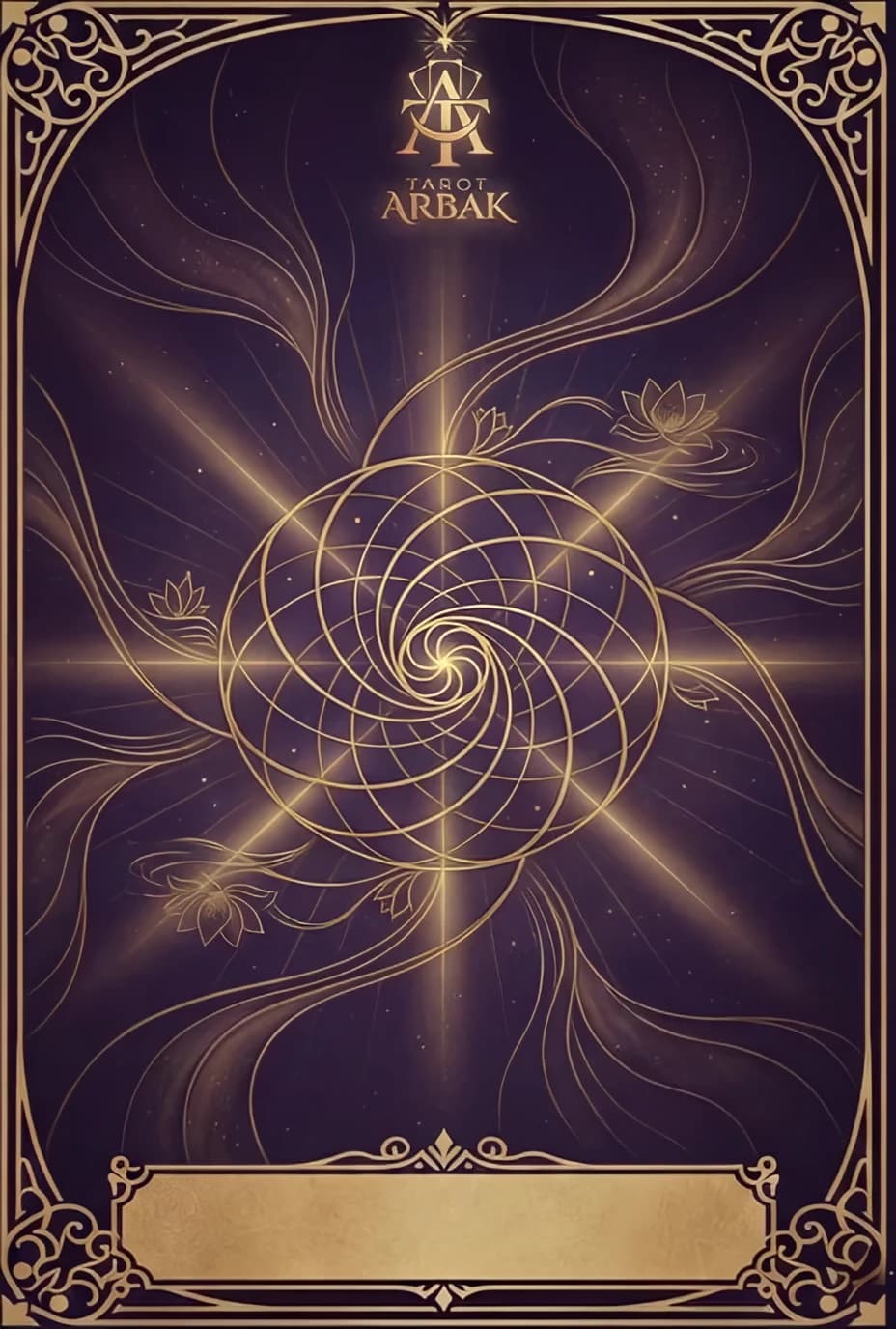
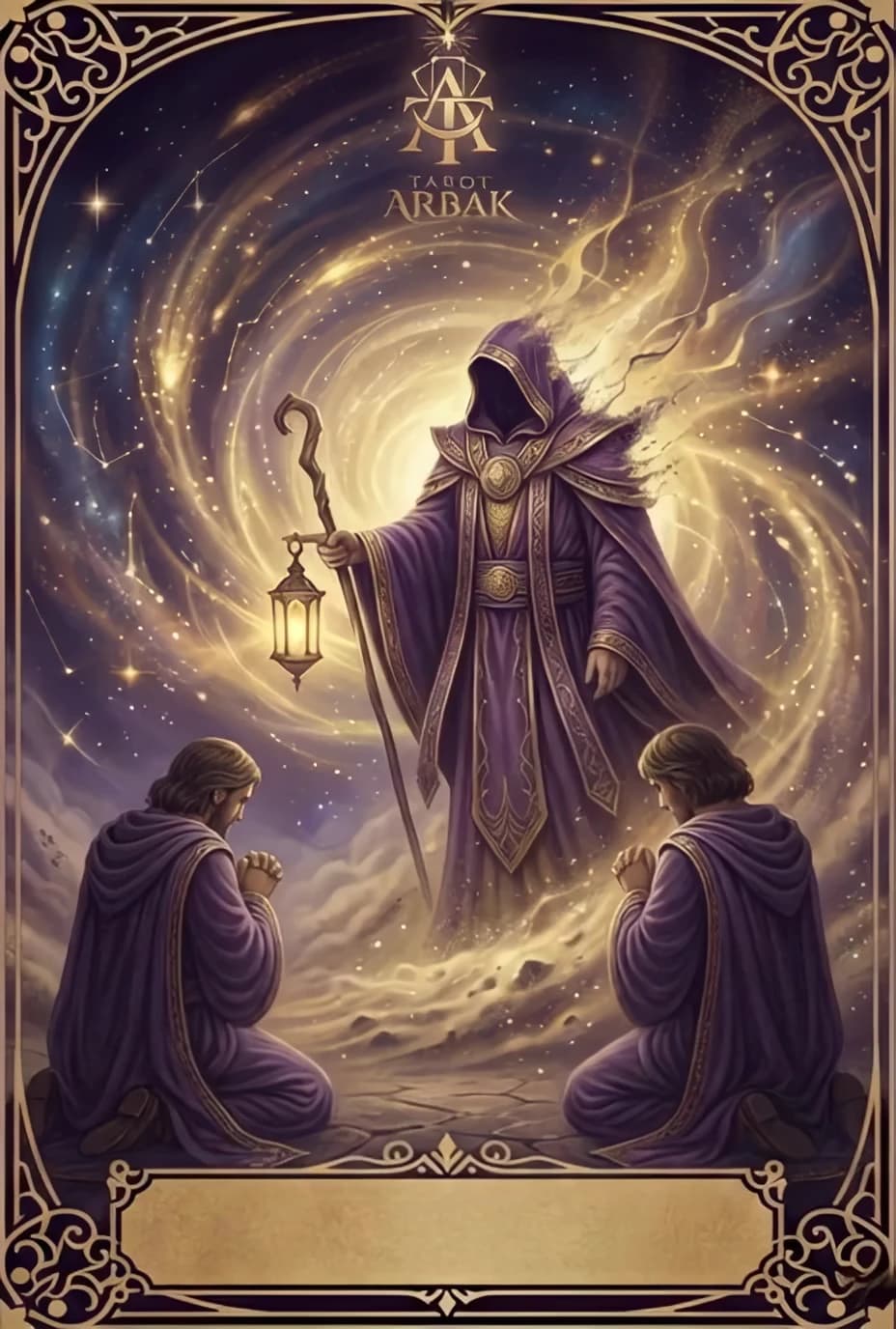
In Tarot Arbak's radical reinterpretation, Death appears without the graphic imagery of traditional decks: no skeleton in black armor, no severed heads, no weapons of any kind. Instead, a faceless figure stands holding a lantern, facing a spiral gateway that represents cosmic transformation. This absence of violence carries the card's central teaching: Death is not an executioner but an illuminator. Death does not act—it opens.
The figure has no face because Death is not personal. It does not target, judge, or discriminate. Death is the cosmic equalizer that treats every being the same regardless of identity, status, or merit. When Death appears in a reading, it does not mean you are being punished or that something is being taken from you. It means that a cycle has completed and transformation must occur whether you choose it or not.
When exploring what does the death tarot card mean, you must confront the card's most uncomfortable teaching: the form you are clinging to cannot continue. Whether you are seeking death tarot advice on navigating necessary endings, or questioning death tarot career transformations, the message is identical: This is not about loss but about liberation. The form dies so that life can continue in new expression.
Death Symbolism
To master death tarot card meaning, one must understand not what Death does but what Death IS. Tarot Arbak's interpretation strips away all violence to reveal the pure archetype of necessary transformation.
No Skeleton, No Sword: Death Does Not Act
The most striking departure from Rider-Waite is the complete absence of violent imagery. No skeleton in armor. No reaper's scythe. No severed heads or fallen figures. Instead, a faceless figure stands holding a lantern before a spiral gateway.
This is not limitation but liberation: Death is not an agent that acts upon you. Death does not kill, does not harvest, does not destroy. Death opens. The absence of weapons teaches that transformation is not violence—it is the natural opening of a threshold when a cycle completes.
Death is not an executioner. Death is an illuminator. Death does not take; Death reveals what cannot continue.
The Faceless Figure: Impersonal Transformation
The figure has no face. This is not omission—it is the card's central teaching: Death has no identity. It is not personal.
Death does not know your name. It does not care about your status, your merit, your attachments, or your objections. Death is the cosmic principle that operates according to laws beyond individual preference. When a cycle completes, the threshold opens regardless of who you are or what you want.
The facelessness also teaches that Death is not your enemy. An enemy has a face—personal malice, targeted hostility. Death has no face because Death has no relationship with you at all. It is not for you or against you. It is beyond such categories entirely.
The Lantern: Illumination, Not Destruction
In Rider-Waite, the sun rises in the distance after Death's passage. In Tarot Arbak, the figure actively holds a lantern that illuminates the spiral gateway. This shifts Death's function: Death does not destroy—Death illuminates what cannot be seen while clinging to old forms.
The lantern does not light darkness; it lights the way forward. Death's torch reveals the possibilities waiting beyond the completed cycle. When you are holding onto a dead form, you cannot see what wants to emerge. Death's light cuts through attachment-induced blindness, showing the threshold that was always there.
Critically, the lantern illuminates forward, not backward. Death does not show you what you are losing—it shows you what becomes possible when you stop clinging to what has already ended.
The Spiral Gateway: Irreversible Threshold
Behind the figure looms a spiral gateway—not a door that opens and closes but a passage through which one moves in one direction only. This spiral replaces Rider-Waite's rising sun with something more profound: not just a new day but a new phase of being.
The spiral teaches that this transformation is not reversible. You cannot step through the gateway and then step back. The threshold, once crossed, changes everything. This is not punishment but the nature of genuine transformation: you cannot become who you were after you have become who you are becoming.
The spiral form (rather than straight passage) indicates that transformation is not linear. You spiral through stages, each turn deeper than the last. The gateway does not lead to a single destination but to a process of continuous unfolding.
Feet Not Fully Grounded: Threshold State
The figure's feet do not fully touch the ground. This detail is critical: Death exists in a threshold state, neither fully here nor fully there.
This represents the liminal nature of transformation. Death is not the end or the beginning but the between—the moment when the old has ended but the new has not yet fully formed. The figure hovers because Death operates in the space between forms, the gap where transformation actually occurs.
This also teaches that Death is not of this world—not because it is supernatural but because it represents the transition between worlds, between phases, between who you were and who you are becoming.
Two Kneeling Figures: Equality Before Transformation
Two figures kneel before the faceless figure—not in worship but in recognition. These represent the Rider-Waite fallen figures (king, child, priest) stripped to their essential teaching: before Death, all status equalizes.
The king and the beggar kneel in the same position. Death does not respect rank. The transformation that opens does not care who you were in the form that is ending. What matters is not your status but your willingness to pass through the threshold.
This equality teaches that transformation is universal—not a punishment for some but the nature of all existence. Everyone passes through Death's gateway. Everyone transforms. The kneeling figures show the proper response: not resistance but recognition, not fighting but accepting the threshold that has opened.
The Central Message: This Form Cannot Continue
Every element builds toward a single, unavoidable teaching: You cannot continue this way.
This is not the same as 'everything will end.' Many things continue—essential being, core values, authentic nature. What cannot continue is the FORM through which these have been expressing. The relationship pattern that has completed. The career identity that has run its course. The belief system that has become too small for who you are becoming.
The question Death poses: What form are you trying to force to continue when its cycle has already completed?
- Symbol 1
No Skeleton/Sword: Death does not act—it opens.
- Symbol 2
Faceless Figure: Impersonal transformation; not personal enemy.
- Symbol 3
Lantern: Illuminates the way forward, not what is lost.
- Symbol 4
Spiral Gateway: Irreversible threshold; one-directional passage.
- Symbol 5
Feet Not Grounded: Threshold state between forms.
- Symbol 6
Kneeling Figures: All status equalizes before transformation.
- Symbol 7
Central Message: You cannot continue this way.
Death as Feelings: The Impersonal Threshold
When querying death as feelings, prepare for an answer about recognition of necessary ending rather than emotional intensity or romantic sentiment. Death does not describe feelings of loss or grief—it describes the quality of awareness someone brings to transformation.
Death as Feelings: Upright
If you want to know how someone feels about you, the upright Death indicates feelings characterized by recognition that a form cannot continue:
-
They feel a cycle has completed: Their feelings toward you are not about loss but about recognition that something between you has reached its natural conclusion. The relationship pattern, dynamic, or even the relationship itself has served its purpose.
-
They feel the threshold has opened: They sense that transformation is necessary—not optional or preventable. The form through which connection has been expressing cannot continue as it has been.
-
They feel impersonal about the ending: Their feelings are not angry or resentful but matter-of-fact. Death does not target—it opens. They recognize that what is ending is not personal but natural.
-
They feel readiness for what emerges: They are not clinging to the dead form but facing the spiral gateway. Their feelings include willingness to let the old die so that new connection—or new phase of connection—can be born.
Death as Feelings: Reversed
When drawn reversed, death as feelings reveals resistance to necessary ending, refusal to acknowledge completion, or desperate clinging to dead forms:
-
They feel denial about completion: They refuse to recognize that the cycle has ended. Their feelings insist that the form can continue even when all evidence shows it cannot.
-
They feel personally attacked by transformation: They interpret the ending as targeted at them—as punishment, rejection, or personal failure. They cannot see Death's impersonal nature.
-
They feel stuck in the threshold: They are neither fully in the old form nor moving through to the new. They hover at the gateway, refusing to step through while unable to return to what was.
-
They feel desperate clinging: Their feelings manifest as attempts to force continuation, to prop up dead dynamics, to make the form continue beyond its natural ending through sheer will.
Death Tarot Advice: You Cannot Continue This Way
When seeking death tarot advice, the message is precise and unavoidable: The form cannot continue. Stop trying to force it.
Specific advice by situation:
-
If you are clinging to a relationship that has ended: Stop. The relationship completed its cycle. Continuing to pursue, maintain contact, or hope for reconciliation is not love—it is refusal to accept reality. Grieve what was, honor its purpose, then let it die completely so that new connection can emerge.
-
If you are maintaining a career that has lost meaning: Acknowledge the death. The work served its purpose; it is not failure but completion. The energy you expend propping up dead work is energy not available for authentic new direction. Let the career die so that aligned work can be born.
-
If you are defending an identity that no longer fits: Stop defending. Who you were served its purpose; who you are becoming requires the death of who you were. The identity you protect is a prison preventing emergence of more authentic self.
-
If you feel stuck between old and new: You are hovering at the threshold, neither fully ending nor genuinely beginning. This liminal paralysis creates suffering without preventing transformation. Step through the gateway. Trust that what waits on the other side is more aligned with who you are becoming.
The ultimate advice of Death is this: You cannot continue this way. The form has ended. Your choice is not whether transformation occurs but whether you pass through the threshold consciously or are dragged through while resisting. Let the old die. What emerges will be more alive than what you are trying to preserve.
UPRIGHT MEANINGS
General Meaning
Death tarot card meaning upright signals that a cycle has completed and the form cannot continue. This is not prediction of physical death but recognition that something in your life—relationship, career, belief, identity—has reached its natural conclusion. The threshold has opened. Transformation must occur.
The upright Death does not ask whether you want this transformation—it asks whether you will accept what has already happened. The form ended. You cannot force it to continue. Your choice is not whether transformation occurs but whether you pass through the threshold consciously or resist the inevitable.
Death does not say everything will end. Death says you cannot continue this way.
This card often appears when you have been trying to force continuation of something that has clearly completed. Perhaps you are defending a relationship that has run its course, clinging to a career identity that no longer fits, or maintaining beliefs that have become too small for who you are becoming. Death illuminates what you already know but have been refusing to see: this form cannot continue.
The upright Death also represents liberation through ending. What dies is not essential being but the accumulated form through which being has been expressing. When the dead form releases, energy that was consumed maintaining it becomes available for new birth. The ending is not loss but the opening of space for what wants to emerge.
Love & Relationships
In romance, death tarot love meaning indicates that a relationship phase or pattern has completed its cycle. This is not necessarily the end of the relationship itself but the death of the form through which connection has been expressing.
If you're single: Death suggests that old relationship patterns must die before new love can emerge. The ways of choosing partners, behaviors in dating, or beliefs about love that have been operating have completed their cycle. Before connection that fits who you are becoming can arrive, these dead patterns must be released.
If you're in a relationship: Something between you must end so that something new can emerge. This may mean the relationship itself has completed its cycle, or it may mean that old dynamics—communication patterns, roles, unresolved wounds—must die so that deeper connection can be born. Death asks: Are you clinging to a form of relationship that has already ended? Are you maintaining the appearance of connection while the reality has moved on?
The card teaches that clinging to dead relationship forms prevents the birth of authentic connection. Whether the relationship ends or transforms, what cannot continue is the way it has been. Let the old die so that genuine love—either new connection or reborn partnership—can emerge.
Career & Money
When querying death tarot career implications, expect a message about career phase completion and the death of professional identities that have run their course.
A career phase, job, or professional identity has reached its natural conclusion. This may appear as job loss, career pivot, or recognition that the work you have been doing no longer serves who you are becoming. Death does not say your career is over—it says this form of career cannot continue.
The upright Death often appears when you have been trying to force continuation of work that has clearly completed. Perhaps you are defending a position that no longer fits, maintaining a professional identity that has become too small, or persisting in work that has lost meaning. Death illuminates what you already sense: this form cannot continue.
The card also represents liberation from professional identity that has become prison. When work identity dies, you discover that you are not your job, your title, or your professional status. The space created by career death becomes fertile ground for work that aligns more authentically with who you are becoming. Trust that the ending serves emergence.
REVERSED MEANINGS
General Meaning
Death reversed signals resistance to necessary transformation—refusal to acknowledge that a cycle has completed and desperate attempts to force continuation of forms that have clearly ended.
Denial of Completion: You are refusing to recognize that something has reached its natural conclusion. The evidence is clear—the form cannot continue—but you maintain denial through sheer force of will. This creates suffering without preventing transformation.
Clinging to Dead Forms: You are expending enormous energy propping up what has already ended. The relationship that ended years ago but still consumes emotional energy. The career that died but is maintained through desperation. The identity that no longer fits reality but is defended at all costs.
Stuck in the Threshold: You hover at the spiral gateway, neither fully in the old form nor moving through to the new. This liminal paralysis prevents both genuine ending and genuine new beginning. You are haunting your own life.
Death reversed asks: What are you refusing to let die even though its cycle has clearly completed?
The reversal does not mean transformation will not occur—it means you are making the transformation harder through resistance. The form will end whether you accept it or not. Your choice is whether to pass through the threshold consciously or be dragged through while fighting.
Love & Relationships
In love, Death reversed indicates refusal to accept relationship completion or desperate clinging to connection forms that have clearly ended.
Denial of Ending: A relationship or phase has completed, but you refuse to acknowledge its death. You maintain the appearance of connection while the reality has moved on. This creates ghost relationship—neither fully alive nor genuinely ended.
Clinging to Dead Patterns: Within ongoing relationship, you may be maintaining dynamics that have clearly completed their purpose. Old wounds, established roles, familiar patterns—these have ended but are propped up through denial and desperate effort.
Stuck Between Relationships: For singles, Death reversed suggests haunting by past connection—refusing to let dead relationships die so that new love can emerge. The energy consumed maintaining ghosts prevents authentic new connection.
The reversal calls for honest recognition: What relationship form are you trying to force to continue when it has clearly completed? Accept the death so that genuine love—either new connection or reborn partnership—can emerge.
Career & Money
Professionally, Death reversed warns of clinging to dead career paths or professional identities that have clearly completed their cycle.
Denial of Career Completion: A job, career phase, or professional identity has ended, but you refuse to acknowledge the death. You maintain the position, title, or identity through desperate effort even though the work itself has moved on.
Propping Up Dead Work: You are expending enormous energy maintaining work that has lost meaning, relevance, or vitality. The career died but continues through sheer will. This creates professional ghost—physically present but psychologically absent.
Fear of Professional Death: You may be resisting necessary career transformation out of terror of losing professional identity. The reversal suggests you are defending who you have been rather than becoming who you could be.
The reversal calls for recognition: What professional form are you forcing to continue when its cycle has clearly completed? Accept the death so that authentic work can emerge.
Frequently Asked Questions
Maintain the Crystalline Infrastructure
Tarot Arbak exists beyond ads and algorithms. Your contribution ensures the permanence of the Logos.