Three of Pentacles
✦ Minor Arcana ✦
Three of pentacles tarot meaning stands as one of the most favorable cards in the entire deck for teamwork, skill development, and collaborative achievement. This card marks the moment when preparation meets cooperation, when individual abilities align with collective purpose to produce tangible results. The Three of Pentacles teaches that great achievements rarely happen in isolation—they emerge when skills are recognized, roles are defined, and effort flows through a structured framework toward a shared goal.
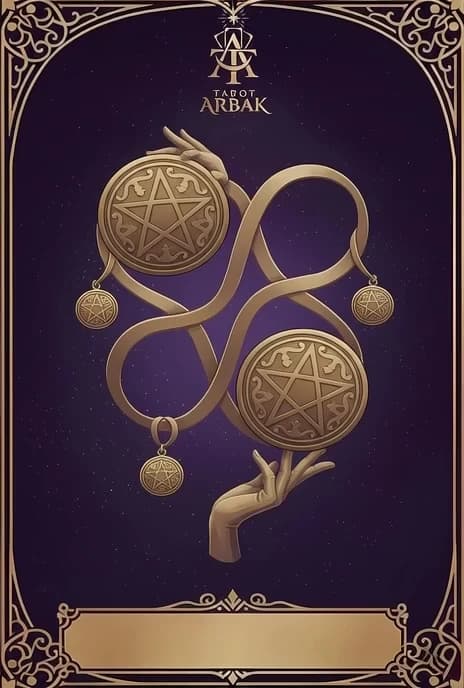
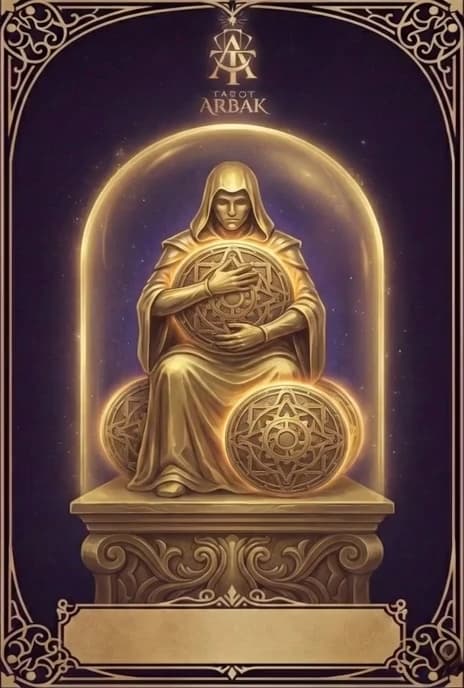
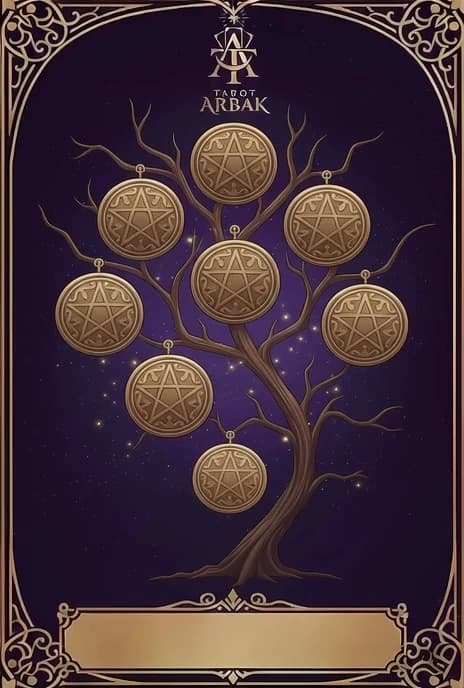
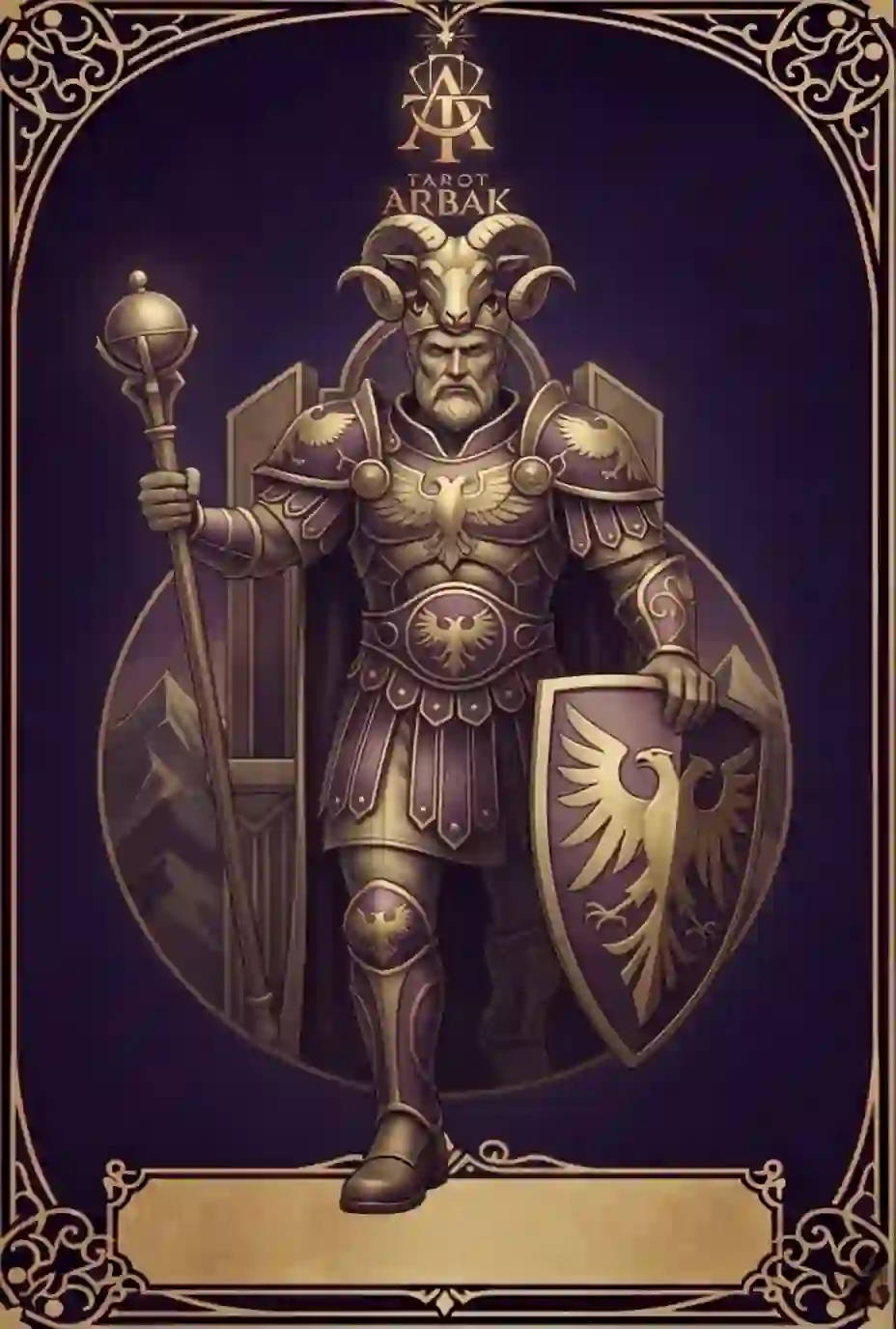
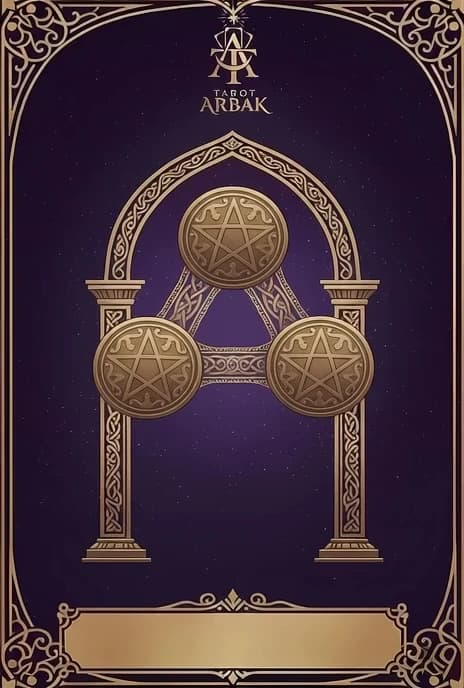
In Tarot Arbak, this card presents a powerful visual statement about collaborative consciousness without showing human figures. The architecture itself speaks of collective effort, suggesting that the principles of teamwork exist beyond individual personality. The arch structure, supporting columns, and geometric arrangement of three pentacles demonstrate that cooperation is not about people but about purpose—not about ego but about process.
The Three of Pentacles teaches that greatness is built together, not alone.
When this card appears in a reading, you are being invited to recognize both your own contribution and the value of working with others. You may have developed skills that are ready to be applied in a collaborative context, or you may be entering a period where teamwork will accelerate your progress significantly. The Three of Pentacles reminds us that mastery is not a solitary pursuit—it flourishes through exchange, feedback, and shared construction of meaning.
The number three in tarot carries profound significance representing synthesis, harmony, and the emergence of something new from the interaction of opposing forces. In the Pentacles suit, which deals with material reality, work, and practical achievement, three signifies the moment when skill transforms into craft—when raw ability meets structured development to produce professional excellence. This is not merely working together; it is the sacred geometry of cooperative creation.
Three of Pentacles Symbolism
The three of pentacles tarot meaning reveals itself through precise architectural composition that speaks to collective effort without depicting human presence. Every element in this card teaches the principles of successful collaboration—the harmony of individual contributions toward unified purpose. Understanding these symbols unlocks the card's deeper message about how achievements emerge through planned, structured teamwork.
Tarot Arbak's Three of Pentacles presents a striking departure from traditional Rider-Waite imagery. Where Rider-Waite shows three craftsmen consulting with each other on a cathedral's construction, Tarot Arbak removes human figures entirely, allowing the architecture itself to tell the story of collaboration. This abstraction teaches that cooperation is a principle, not merely a practice—that the patterns of working together exist independent of who is doing the work.
The card demonstrates that successful collaboration requires structure as much as it requires effort. The arch, columns, and geometric arrangement of pentacles show that achievement follows design—that results emerge from intentional planning rather than accidental association. This is a card about the architecture of success, teaching that teams that build together stand together.
Three Pentacles: Unified Achievement
The three pentacles arranged beneath the arch represent the integration of individual contributions into collective success. Unlike the Ace of Pentacles, which represents pure potential, or the Two of Pentacles, which shows balancing opposing forces, the Three demonstrates synthesis—distinct elements combining to create something greater than any could achieve alone. Each pentacle maintains its individual identity while participating in a unified pattern.
In traditional tarot, pentacles symbolize material resources, practical skills, and tangible achievements. Here, three pentacles positioned within the arch structure indicate that skill meets circumstance—that abilities are not merely possessed but applied within specific contexts that give them meaning. The Three of Pentacles teaches that talent alone is insufficient; mastery requires the right conditions for expression, and those conditions are often created through collaboration.
Individual brilliance finds its truest expression when aligned with collective purpose.
The geometric arrangement of pentacles demonstrates that collaboration requires both equality and hierarchy—that each contribution is equally important while relationships between contributions follow a planned structure. This teaches that successful teamwork honors individual strengths while organizing them according to shared vision. The Three of Pentacles does not erase individuality but rather elevates it through participation in something larger.
Arch Structure: Framework of Collaboration
The arch spanning above the pentacles represents the unifying framework that makes collaboration possible. An arch is one of architecture's strongest structural elements precisely because it distributes pressure evenly across all its components—no single point bears the full burden, yet all work together to support the whole. This teaches that true teamwork creates a structure where shared burden enables individual strength.
In collaborative contexts, this arch represents the shared vision, common goal, or organizational framework that aligns diverse contributions toward unified achievement. Without this framework, individual efforts remain isolated; with it, they become mutually reinforcing. The arch teaches that cooperation requires architecture—that teams need clear parameters, defined objectives, and shared understanding to function effectively.
The arch's perfect curvature demonstrates that collaboration follows natural laws, not just human intention. When individuals align their efforts according to sound principles, the resulting structure carries strength that no individual effort could achieve alone. The Three of Pentacles shows that successful teamwork feels natural, not forced—that when the framework is right, cooperation emerges organically because each person recognizes how their contribution fits the whole.
Supporting Columns: Equal Roles, Shared Foundation
The columns positioned beneath the arch represent the equal importance of all roles within collaborative effort. In a well-designed arch, every column plays a critical role—remove one and the entire structure loses integrity. This teaches that teamwork honors diversity through structure—that different contributions are equally necessary even when they serve different functions.
These columns also demonstrate that collaboration requires both support and stability. A structure that reaches upward (the arch achieving toward completion) depends equally on what grounds it (columns providing foundation). This teaches that ambitious goals depend on solid foundations—that teams must build stable systems of communication, trust, and mutual support before attempting significant achievements together.
The columns' vertical orientation suggests that each role provides a distinct line of strength to the collective effort. Just as columns support different parts of an arch, team members bring different perspectives, skills, and approaches to shared work. The Three of Pentacles teaches that unity does not mean uniformity—that the strongest collaborations arise when distinct contributions align through shared purpose.
Geometric Arrangement: Planned Progress
The precise geometric arrangement of all elements teaches that collaboration requires intention—that successful teamwork does not happen by accident but emerges from thoughtful planning, clear communication, and structured development. The card demonstrates that working together is not merely gathering in the same space but organizing efforts according to deliberate design.
This geometric precision also suggests that collaboration follows discoverable principles. Just as geometry reveals mathematical truths that exist regardless of human recognition, the principles of effective teamwork operate independently of our understanding of them. Teams that learn these principles (clear roles, shared vision, mutual respect, defined processes) achieve more reliably than those who rely on personality or chemistry alone.
Structure enables spontaneity; framework facilitates freedom.
The Three of Pentacles shows that creative collaboration paradoxically requires constraint—that clear boundaries, defined processes, and shared parameters actually liberate individual creativity rather than restricting it. When team members understand exactly how they contribute to the whole, they are freed to express their unique gifts within confidence that their work serves the shared purpose.
Absence of Human Figures: Process Over Personality
Perhaps the most striking feature of Tarot Arbak's Three of Pentacles is the complete absence of human figures, which shifts focus from personalities to principles. Where traditional decks show craftsmen consulting each other, Tarot Arbak demonstrates that collaboration exists as a natural law, independent of who practices it. This abstraction elevates teamwork from personal preference to cosmic principle.
This absence teaches that the principles of cooperation operate whether or not people consciously apply them. Arch structures hold weight regardless of whether we understand the physics. Similarly, teams succeed when they honor certain principles regardless of whether they articulate them: clear roles, mutual respect, shared vision, honest communication. The Three of Pentacles invites us to recognize and work with these principles rather than reinventing collaboration through trial and error.
By removing human presence, the card also removes ego from the equation. There are no faces, no expressions, no individuals claiming credit or seeking recognition. Only the structure remains—pure purpose without personality. This teaches that authentic collaboration transcends individual identity, that the work matters more than who does it, that collective achievement belongs to everyone and no one simultaneously.
- Symbol 1
three pentacles
- Symbol 2
arch structure
- Symbol 3
supporting columns
- Symbol 4
geometric arrangement
- Symbol 5
architectural framework
Three of Pentacles as Feelings: Collaborative Connection
Upright: The Experience of Cooperative Attraction
When three of pentacles as feelings appears upright in emotional readings, it represents:
- Relationship building — The person is emotionally invested in building something with you; they see you as a partner in creating shared life
- Practical commitment — Their feelings include desire to work together on practical matters: home, finances, future plans
- Mutual contribution — They want to give and receive in balanced ways; the relationship feels like collaboration rather than dependency
- Respect for skills — They appreciate what you bring to the partnership and want to contribute their own strengths
Reversed: The Distortion of Cooperative Feelings
When three of pentacles as feelings appears reversed, it may indicate:
- Imbalanced effort — One person doing all the work while the other remains passive; cooperative feelings without cooperative action
- Unclear partnership — Wanting connection but unable to work together effectively on practical matters
- Isolation in togetherness — Being in relationship but functioning separately rather than building together
Three of Pentacles Tarot Advice: Collaborate with Purpose
Three of pentacles tarot advice teaches that mastery develops through exchange with others rather than in isolation. The card advises you to recognize both your own contribution and the value of working with others toward shared goals.
Specific advice by situation:
- In teamwork — Bring your best skills while honoring others' contributions. Clear communication about roles, expectations, and shared vision enables collective achievement
- In professional development — Seek environments where collaboration is valued and where you can learn from more experienced colleagues. Mentorship flows both directions
- In skill development — Your abilities find their highest expression when aligned with purpose larger than yourself. Test and refine your skills through cooperative application
- In relationships — Build together intentionally. Love deepens through the act of cooperative construction—shared plans, mutual effort, and building meaningful life together
- In creative projects — Find collaborators whose strengths complement your own. The best work often emerges from structured partnership rather than solitary effort
The ultimate three of pentacles tarot advice: Great achievements rarely happen in isolation. Your skills are ready to be applied in collaborative contexts—working with others will accelerate your development and produce results greater than you could achieve alone.
UPRIGHT MEANINGS
General Meaning
When three of pentacles tarot meaning appears upright, it signals a highly favorable time for collaboration, teamwork, and the development of skills through cooperative effort. You are entering a period where working with others will accelerate your progress significantly—where individual contributions align with collective purpose to produce results greater than any single person could achieve alone. This card suggests that you have developed abilities that are ready to be applied in collaborative contexts and that your growth now depends on engaging with others rather than working in isolation.
The Three of Pentacles confirms that your skills have reached the level of craft—they are ready to be tested, refined, and expanded through exchange with others.
This card often appears when beginning new projects that require team coordination, joining existing groups where your contributions will be valued, or forming partnerships that combine complementary strengths. The upright position indicates that the structures for successful collaboration are in place: clear roles are emerging or being defined, shared vision is developing, and participants recognize the value of working together. Trust the process of cooperation rather than trying to control every aspect yourself.
The Three of Pentacles in upright position also indicates professional development through mentorship—either receiving guidance from those with more experience or offering your expertise to those still learning. This card teaches that mastery flows in both directions—that teaching solidifies your own understanding while learning from others expands your perspective. Recognize that you are both student and teacher, that your development depends on both sharing what you know and remaining open to what you don't.
Love & Relationships
In love readings, three of pentacles tarot meaning upright suggests that relationships benefit from intentional effort and mutual contribution. For those in partnerships, this card indicates that your relationship thrives when both people actively invest in building something together—whether that is a home, a family, shared goals, or simply the relationship itself. The Three of Pentacles teaches that love deepens not through passive enjoyment but through cooperative construction of shared life.
This card can indicate that it is time to work together on specific projects, plans, or shared responsibilities. Perhaps you and your partner need to align on financial goals, make decisions about living arrangements, or collaborate on parenting approaches. The Three of Pentacles suggests that the act of working together strengthens your bond as much as the results you achieve. Communication focused on practical planning produces both progress and connection.
For those seeking relationships, the Three of Pentacles suggests that compatibility demonstrates itself through how well you work together—how smoothly you coordinate efforts, how respectfully you handle differences, how effectively you combine your strengths toward shared objectives. This card advises looking not just for chemistry but for cooperative capacity: can you build together? Do your skills complement each other? Does working together enhance your individual lives?
Love is not just feeling—it is the ongoing practice of building shared meaning together.
Career & Money
Professionally, three of pentacles tarot meaning upright is among the most favorable cards for teamwork, career advancement through collaboration, and skill development in group contexts. You may be joining a new team, taking on projects that require coordination with others, or finding that your work increasingly involves partnership and cooperative effort. This card confirms that you are in the right environment for your skills to develop—the presence of others provides challenge, feedback, and opportunity to apply your abilities at higher levels.
This card often indicates recognition for your contributions within collaborative settings. Your skills are noticed and valued by colleagues and superiors. The Three of Pentacles suggests that your role within teams is becoming clearer—that you understand your specific contribution and how it fits the larger project. This clarity enables you to work more effectively and positions you for advancement as teams succeed and leadership recognizes those who make success possible.
For those considering career moves, the Three of Pentacles advises looking for environments where collaboration is valued and where you can learn from more experienced colleagues. This is not a card for solitary work environments or highly competitive cultures; rather, it favors cooperative contexts where mutual development is possible. The upright position indicates that such environments are available to you now or that your current workplace offers more opportunity for teamwork than you might be utilizing.
The Three of Pentacles also suggests that this is an excellent time for mentorship—either seeking guidance to develop your craft or offering your expertise to others. Teaching solidifies your skills while learning expands them; both directions of knowledge exchange accelerate professional growth.
REVERSED MEANINGS
General Meaning
Three of pentacles tarot meaning reversed typically indicates disruptions in collaborative effort, problems with teamwork, or obstacles preventing skills from finding their appropriate expression through cooperative work. You may be experiencing frustration with group projects, feeling undervalued in team contexts, or discovering that roles are unclear and responsibilities are unevenly distributed. Alternatively, this reversal can indicate reluctance to collaborate—preferring isolation even when working with others would serve your development.
The reversed Three of Pentacles asks: Are the structures for effective collaboration in place, or is effort being wasted on poor coordination?
This reversal may point to specific issues: lack of clear communication about roles and expectations, mismatched skills and needs within teams, organizational problems that prevent cooperative effort from succeeding, or personality conflicts that undermine group effectiveness. The Three of Pentacles reversed often appears when good intentions meet poor execution—when everyone wants to work together but the structures, processes, or understanding necessary for success are missing.
Alternatively, this reversal can indicate isolationism—the belief that working alone is superior to collaboration despite evidence to the contrary. You may be resisting partnership, refusing to seek help, or attempting to do everything yourself even when tasks clearly require teamwork. This shadow of the Craftsman believes that independence proves competence, missing the truth that true mastery recognizes when collaboration enhances rather than compromises individual excellence.
The reversed Three of Pentacles may also indicate that your skills have not yet reached the level of craft—that you need more individual development before you are ready to contribute effectively in collaborative contexts. In this case, the reversal advises focusing on personal skill-building before seeking cooperative applications. There is no shame in this; mastery requires both solitary preparation and cooperative application.
Love & Relationships
In love readings, three of pentacles tarot meaning reversed may indicate problems with cooperation in relationships—uneven effort, unclear shared goals, or difficulty working together on practical matters. You and your partner may want the same things but find yourselves approaching them in incompatible ways, or you may struggle to align on plans for the future. The reversed Three of Pentacles suggests that relationship building requires clearer structure—that good intentions alone cannot compensate for poor coordination.
This reversal can indicate imbalance in contributions to the relationship—one person doing more of the work while the other remains passive, or both people investing effort but in different directions that don't combine effectively. The Three of Pentacles reversed advises examining whether roles within your partnership are clear and whether both people feel that their contributions are recognized and valued.
For those seeking relationships, the Three of Pentacles reversed may indicate that you are attracting or pursuing partners with whom you cannot work effectively—perhaps chemistry exists but cooperative capacity is lacking. This card advises looking beyond immediate attraction to assess practical compatibility: can you communicate about finances? Can you make decisions together? Do your long-term visions align? Relationships are not just about how well you enjoy each other's company but about how well you build shared life together.
Relationships require both the structure of shared purpose and the flexibility to adapt when plans need adjustment.
The reversed Three of Pentacles may also suggest that you are bringing past negative experiences with teamwork into current relationships—assuming that collaboration will fail because it has failed before, or refusing to trust others with shared responsibility because you have been let down in the past. This shadow prevents the very cooperation that might heal old wounds, creating a self-fulfilling prophecy of isolation.
Career & Money
Professionally, three of pentacles tarot meaning reversed warns of several potential issues in collaborative work contexts. You may be in environments where teamwork is dysfunctional—where roles are unclear, communication is poor, or effort is not recognized or rewarded appropriately. Alternatively, you may be isolating yourself professionally—refusing to collaborate even when partnership would benefit your work, or attempting projects alone that clearly require team coordination.
This reversal can indicate workplace politics undermining cooperation—credit being claimed unfairly, responsibilities being shifted to others without acknowledgment, or competition among colleagues preventing genuine teamwork. The Three of Pentacles reversed suggests that the structures necessary for effective collaboration are missing or broken and that until they are repaired, frustration and wasted effort will continue.
If you are currently employed, this card advises assessing whether your workplace truly values teamwork or merely pays lip service to it. Are collaborative efforts recognized and rewarded? Do teams have clear objectives and sufficient resources? Is there accountability for how people work together? If the answers are negative, the reversed Three of Pentacles may indicate that this environment is not right for you regardless of other factors.
For those seeking employment, this card advises looking carefully at company culture during interviews and research. How do current employees describe teamwork? Are there examples of successful collaborative projects? Do performance evaluations recognize individual contribution within team contexts? The Three of Pentacles reversed warns against environments where collaboration is required but not supported.
This reversal may also indicate that your skills need further development before you are ready for the collaborative opportunities you desire. In this case, the card advises focusing on personal skill-building while remaining open to mentorship and learning opportunities. Mastery requires both solitary preparation and cooperative application.
Frequently Asked Questions
Maintain the Crystalline Infrastructure
Tarot Arbak exists beyond ads and algorithms. Your contribution ensures the permanence of the Logos.