The Emperor

✦ Major Arcana ✦
The emperor tarot card meaning represents the fourth card of Major Arcana, embodying the archetype of authority, structure, and the establishment of order. Where The Empress nurtures and creates through fertility, The Emperor builds and maintains through disciplined construction. This card does not represent power in the sense of domination, but rather authority—the legitimate right to organize, direct, and protect. The Emperor creates the structures that allow civilization to function: laws, institutions, hierarchies, and the systems that transform chaos into order.
The Emperor embodies the masculine principle in its mature, integrated form—not aggression or conquest, but protection, provision, and the capacity to build lasting foundations. This figure does not rule through force; he rules because he represents something larger than himself: system, tradition, and the established order that benefits all. When The Emperor appears, you are being called to take responsibility, to establish clear boundaries, to create structure where none exists, and to claim your legitimate authority in whatever realm you operate.
The Emperor does not seek power; power recognizes its proper place within the structure he creates.
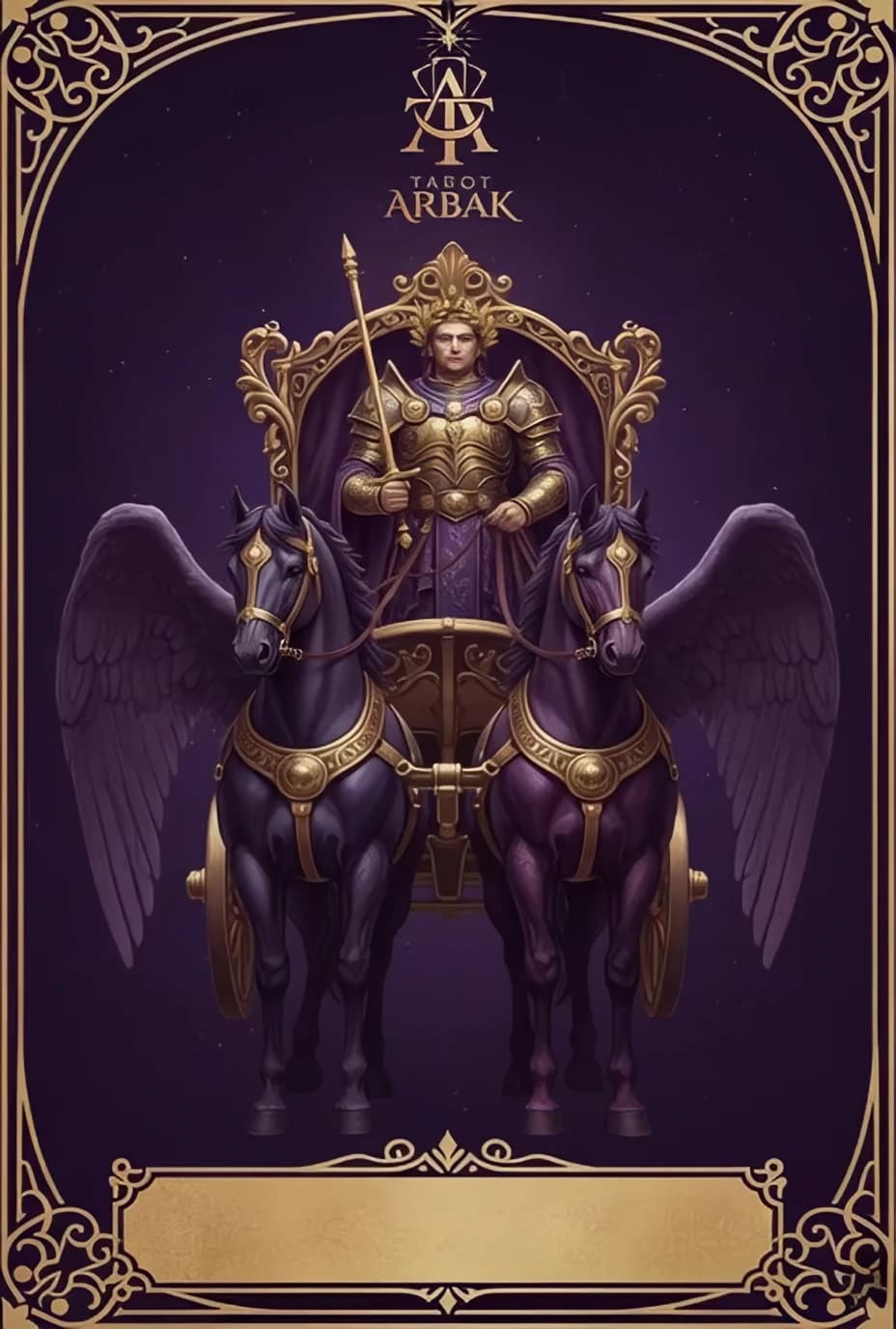
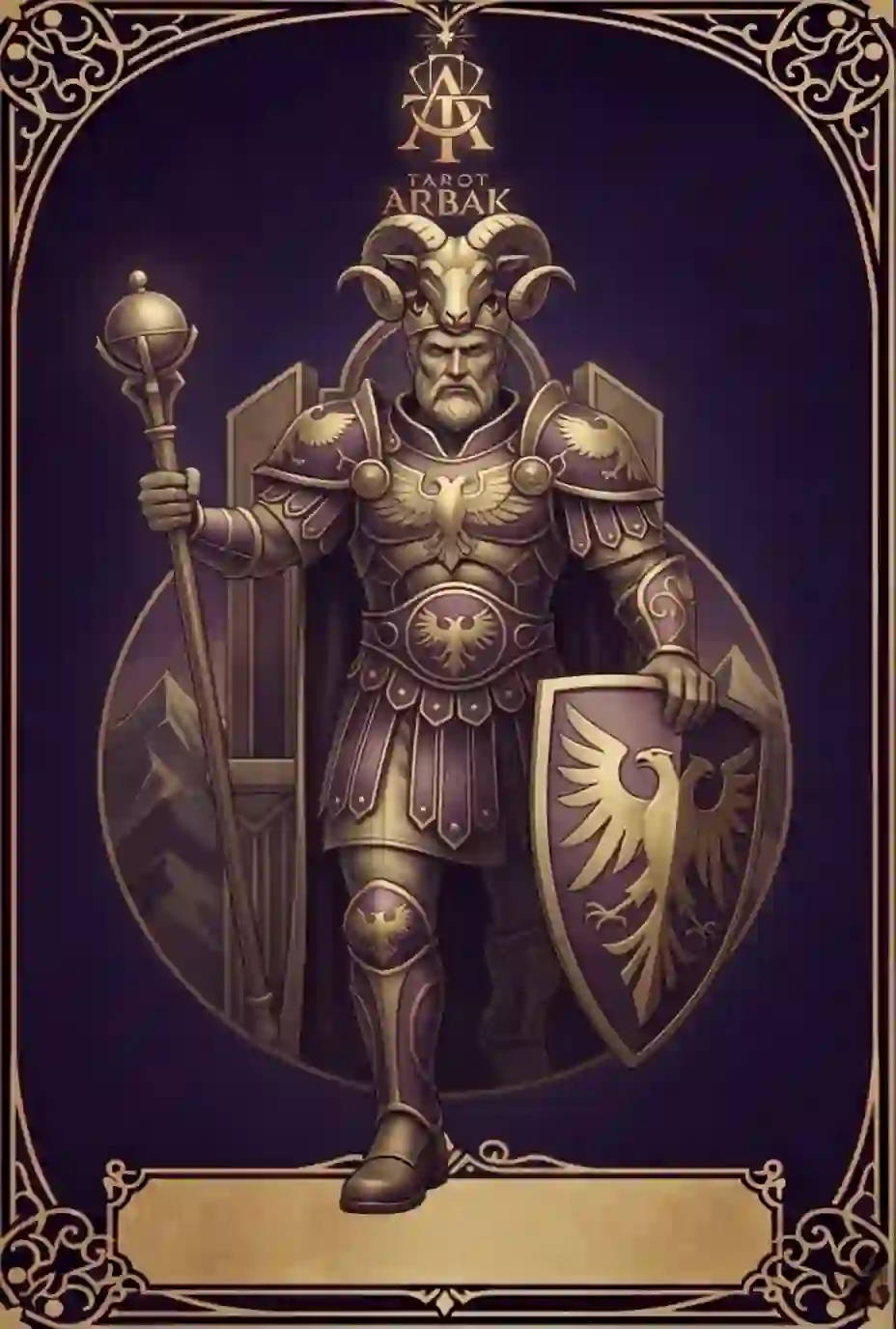
In Tarot Arbak, The Emperor is not merely a king but the living embodiment of authority itself. The figure sits upon a throne of stone, armored not for battle but for defense. This distinction is crucial: The Emperor protects what exists rather than conquering new territories. His strength lies not in expansion but in maintenance. The mountains rising behind him are cold, sharp, and inflexible—just as the order he establishes must be. The Emperor understands that life flourishes within boundaries, that freedom requires the constraint of law, and that genuine security emerges from structure rather than chaos.
The number 4 connects this card to stability, foundation, and the material world. In numerology, 4 represents the four directions, the four elements, and the four walls that create a home. The Emperor builds on the feminine creativity of The Empress, providing the container and structure through which her creativity can manifest in lasting form. Together, these cards represent the complete cycle of creation: the Empress conceives, the Emperor establishes.
The emperor tarot card meaning teaches that authentic authority comes not from domination but from service to something greater than self. Whether you are building a business, raising a family, organizing a community, or establishing your own internal discipline, The Emperor reminds you that genuine power flows through structure, not around it. Your capacity to create lasting impact depends on your willingness to establish order, maintain boundaries, and accept responsibility for what you build.
The Emperor Symbolism
The emperor tarot card meaning reveals itself through the precise visual composition of an armored figure seated upon a stone throne. Every element shifts between the representation of power and the reality of protection, creating a bridge between aggressive domination and ordered authority. Understanding these symbols is key to mastering the card's deep spiritual and psychological message.
Tarot Arbak's Emperor sits motionless upon a throne that seems to merge with his armored form. This union of seat and sovereign is visually striking—where one ends and the other begins cannot be determined. The figure wears a helmet crowned with ram's horns, the symbol of Aries and Mars energy that traditionally represents war and conquest. Yet here, that energy has been internalized: the horns are part of the Emperor's own head, not merely decorations upon his throne. This teaches that the energy of action and initiative has been integrated into his very being rather than remaining as an external tool.
Unlike Rider-Waite's depiction where the Emperor holds an ankh-like object in one hand, Tarot Arbak's version presents a more abstracted representation: a staff in the left hand and a shield in the right. This positioning carries profound symbolic weight. The staff, held in the passive hand, represents the authority to rule—the legitimate claim to power. The shield, held in the active hand, represents the commitment to protect. The Emperor does not wield a weapon of attack; his power is entirely defensive. He creates safety by keeping chaos out, not by conquering territory.
Stone Throne: Unmoving Foundation
The stone throne upon which The Emperor sits represents immutable structure—authority that does not shift according to circumstance or preference. Unlike wooden seats or ornate couches, stone endures across centuries. This is not a throne of comfort or luxury but of permanence. The Emperor sits not because he desires comfort but because he represents stability itself.
In Tarot Arbak, the throne and the armored figure nearly merge into one another. This visual fusion communicates a powerful lesson: the authority and the structure have become indistinguishable. The Emperor is not merely using power; he has become the power structure itself. This is not ego inflation but the proper integration of self with the role one occupies. True authority emerges when the person and the position align completely.
The throne does not support the Emperor; they support each other in perfect balance.
The stone foundation teaches that genuine authority must be grounded in something real, not in reputation, charisma, or temporary advantage. You cannot build lasting power on sand. The Emperor's strength comes from his connection to something more permanent than himself: law, principle, divine right, or simply the necessity of order. When you embody The Emperor, you ground your authority in values that outlast you, not in your personal desire for control.
Armored Figure: Defensive Strength
The armored figure represents protection through preparedness—strength that does not attack but cannot be breached. Every aspect of the armor serves defense: the helmet protects the head (thinking and vision), the breastplate guards the heart (emotion and vulnerability), and the gauntlets shield the hands (action and creation). This comprehensive protection teaches that true authority requires the capacity to withstand assault without being destroyed.
Critically, the armor is designed for defense, not offense. There are no spikes, no sharp edges meant to inflict harm. The Emperor does not need to intimidate others because his authority is legitimate. He protects his domain not because he fears invasion but because protection is his responsibility. Those under his care deserve safety; his strength is given to them, not directed against them.
In Tarot Arbak's interpretation, the armored figure appears almost like a guardian sentinel rather than a conquering king. This shift from monarch to guardian reveals the card's deeper meaning: the Emperor's power exists not to expand territory but to maintain order. He does not seek to impose his will on others; he maintains the system that allows others to flourish within established boundaries. His strength is given in service to the structure he represents, not to his personal ego.
Ram Horns on Helmet: Internalized Will
The ram horns adorning The Emperor's helmet represent internalized Mars energy—the aggressive, initiating force of Aries that has been integrated into conscious authority rather than expressed as raw aggression. In traditional Rider-Waite imagery, ram heads appear as decorative elements on the throne. In Tarot Arbak, they emerge directly from the Emperor's own head, signifying that this energy has been absorbed into his very being.
The ram symbolizes courage, initiative, and the drive to overcome obstacles. These are martial qualities, yet The Emperor wears them not as weapons but as part of his identity. This teaches that authentic authority requires the capacity for decisive action, the willingness to confront threats, and the strength to defend what matters. However, these qualities are not expressed impulsively. They have been tempered by responsibility, directed by wisdom, and integrated into a stable character structure.
The helmet itself protects the mind—the seat of intellect, decision, and vision. The ram horns emerging from it suggest that the Emperor's thinking itself carries the force of will. His decisions are not merely preferences or calculations; they carry the weight of authority because his mind is aligned with the power he represents. When you embody The Emperor, your very thoughts carry the strength of conviction because you have integrated your will into your character.
The ram horns do not make the Emperor powerful; they make him decisive.
Staff of Authority: Legitimate Power
The staff held in The Emperor's left hand represents the legitimacy of rule—the claim to authority that comes not from force but from rightful position. In many traditions, the scepter or staff symbolizes the transfer of power from a higher source: the divine, the people, or tradition itself. The Emperor does not wield this staff as a weapon; he holds it as proof of his right to rule.
The left hand, in esoteric symbolism, represents the passive or receiving side. The fact that The Emperor holds his authority in this hand suggests that his power comes to him from somewhere beyond himself. He does not manufacture legitimacy through manipulation, propaganda, or force of personality. His authority flows through him from a higher source: law, tradition, divine right, or the consent of the governed. This distinction separates authentic leadership from domination.
The staff also represents the axis around which order rotates. Like the pole that holds up a tent or the spine that supports the body, the staff provides the central structure that allows everything else to function around it. The Emperor is not the chaos of movement but the still point around which organized action occurs. When you embody The Emperor, you become the stable center that allows others to perform their roles effectively.
Shield of Protection: Boundary Setting
The shield held in The Emperor's right hand represents defensive power—the capacity to protect what matters without attacking what does not. Unlike the sword or spear, which extend outward to harm, the shield extends to protect. This fundamental difference reveals the Emperor's true nature: his strength exists to maintain, not to expand; to guard, not to conquer.
The right hand, in esoteric symbolism, represents the active or giving side. The fact that The Emperor holds his shield in this hand suggests that protection is his active contribution to the world. He does not merely exist as authority; he acts to protect. This is the masculine principle in its highest form: not domination but provision, not control but safeguarding. The Emperor's strength is given in service to others, not used against them.
Shields create boundaries, and boundaries make civilization possible. Without the protection of law, the chaos of violence would prevent culture, art, commerce, and relationships from flourishing. The Emperor understands that freedom exists within constraint, that safety requires boundaries, and that genuine community depends on the exclusion of destructive forces. When you embody The Emperor, you create and maintain boundaries that allow what you value to thrive.
The shield does not block opportunity; it blocks destruction.
Mountains in Background: Immutable Order
The cold, sharp, inflexible mountains rising behind The Emperor represent the permanence of structure—the reality that genuine order cannot adapt to every preference or accommodate every desire. Mountains do not bend for anyone; they stand as they are regardless of weather, opinion, or human comfort. This rigidity is not cruelty but necessity.
The mountains are cold, not because they lack feeling but because they exist beyond human emotion. The Emperor's authority similarly operates beyond personal preference, favoritism, or emotional response. The law applies equally to everyone; the structure serves all who operate within it; the boundaries exist for the good of the whole, not for the comfort of individuals. This impersonal quality may feel harsh to those who expect authority to accommodate their desires, but it is precisely what makes authority trustworthy and effective.
The sharpness of the mountains represents the clarity of structure. Good laws, good systems, and good boundaries are clear and precise. Ambiguity in authority creates confusion and abuse. The Emperor's order is sharp because it must be decisive. There is right and wrong, inside and outside, allowed and forbidden. These distinctions make navigation possible. When you embody The Emperor, you establish clear boundaries that others can rely upon even when they disagree with them.
Absence of Emotion: Authority Over Feeling
The Emperor's expression is not soft; his face shows no warmth, no tenderness, no apparent empathy. This absence of emotion represents authority beyond feeling—the capacity to make decisions based on principle rather than preference, on necessity rather than sentiment. In the context of leadership, this is not a defect but a requirement.
The Emperor does not say "I understand" because understanding is not his function. He says "This is the way." His role is not to validate feelings but to maintain order. Empathy may be appropriate in many contexts, but when maintaining structure, it can be a liability. If every exception were made because someone's feelings were hurt, no structure could survive. The Emperor's apparent coldness preserves the integrity of the system he represents.
This does not mean the Emperor lacks feelings; it means feelings do not govern his decisions. The masculine principle operates according to logic, principle, and necessity. The Emperor embodies this capacity for rational, consistent, unemotional governance. When you embody The Emperor, you recognize that sometimes the right decision hurts, sometimes the necessary boundary feels cruel, and sometimes the authority you exercise will make you unpopular. Your commitment is to what is right, not to what feels good.
The Emperor does not apologize for structure; he apologizes for nothing.
- stone throne
- armored figure
- ram horns on helmet
- staff of authority
- shield of protection
- mountains in background
- stoic expression
UPRIGHT MEANINGS
General
When The Emperor appears upright, the emperor tarot card meaning signals a time to establish structure, take responsibility, and claim your legitimate authority. You possess or need to develop the capacity to create order, set boundaries, and maintain systems that allow what you value to flourish. This is not a card of waiting or hoping; it is a card of building and maintaining. The structures you create now will serve as foundations for future growth.
The Emperor does not ask permission to lead; he leads because it must be done.
This position indicates that you are being called to take charge of some area of life that has been lacking direction. Perhaps a project needs organization, a relationship needs clearer boundaries, a business needs better systems, or your own internal life needs more discipline. The Emperor teaches that chaos does not resolve itself; it must be structured by intentional action. Your capacity to create lasting impact depends on your willingness to take responsibility, to make unpopular decisions when necessary, and to maintain boundaries even when others resist them.
This card often appears when you have reached a level of maturity that requires you to move beyond your own needs and serve something larger. The Emperor has outgrown the hero's need for conquest and recognition; he serves the system itself. Similarly, you may be moving beyond personal ambition toward service to family, community, profession, or principle. Your power comes not from force but from legitimate authority—the right combination of skill, experience, and responsibility that makes leadership appropriate rather than arbitrary.
Love
In love readings, the emperor tarot card meaning upright indicates the establishment of structure and boundaries within relationships. For those seeking relationships, this card suggests that you know what you want and are not willing to settle. The Emperor represents clear standards and the courage to maintain them. This may feel rigid to potential partners who prefer ambiguity, but it actually creates the conditions for genuine connection to emerge. You cannot build a lasting relationship without knowing who you are and what you will not accept.
For those in partnerships, this card suggests that the relationship may benefit from clearer structure. Perhaps roles and responsibilities need definition, boundaries need reinforcement, or shared goals need explicit articulation. The Emperor in love does not mean controlling your partner or being controlled by them; it means creating the framework within which both people can flourish. Healthy relationships require the container of structure: agreed-upon rules, mutual expectations, and the capacity to enforce boundaries when necessary.
The Emperor protects the relationship not by controlling the partner but by maintaining its boundaries.
This card may also represent a partner who embodies the Father/King archetype—someone who is stable, protective, and committed to creating structure. However, be careful not to confuse this archetype with the Tyrant. The Emperor protects, controls, and serves, while the Tyrant dominates, manipulates, and uses. Look for consistency between words and actions, for boundaries that serve both people, for authority that is exercised with responsibility rather than ego.
Career
Professionally, the emperor tarot card meaning upright is highly favorable for leadership, management, entrepreneurship, and any role that requires creating and maintaining structure. Your capacity for organization, your ability to make difficult decisions, and your willingness to take responsibility are being recognized and called upon. This is an excellent time to step into positions of greater authority, to establish systems that improve efficiency, or to found enterprises that will create lasting value.
This card suggests that success comes not from innovation alone but from the capacity to execute consistently and reliably. The Emperor understands that brilliant ideas without structure cannot be scaled. Whatever your professional situation, you are being asked to consider how you can create better organization: clearer processes, stronger boundaries, more reliable systems. The businesses and careers that endure are those built on structural integrity, not merely on creative spark.
For those in leadership positions, The Emperor confirms your authority but also reminds you of your responsibility. Power is not a privilege; it is a duty. Those under your authority deserve protection, clear direction, and consistent standards. Your job is not to be liked but to be effective. When you embody The Emperor professionally, you understand that your authority exists to serve the organization, its mission, and the people who depend on it.
Spiritual
Spiritually, the emperor tarot card meaning upright represents the establishment of order within the psyche—the capacity to create structure that supports rather than restricts your spiritual development. This card appears when you are ready to move beyond sporadic spiritual experiences into consistent, disciplined practice. The Emperor teaches that genuine spiritual growth requires the container of structure: regular meditation, ethical boundaries, ritual practice, and the capacity to distinguish authentic guidance from egoic fantasy.
The Emperor in spirituality does not mean rigid dogmatism or authoritarian control. True spiritual authority, like all legitimate authority, serves rather than dominates. The structures you create—your daily practices, your ethical commitments, your spiritual disciplines—exist to liberate consciousness, not to imprison it. Without the structure of discipline, the spiritual path becomes mere entertainment. Without boundaries, the psyche cannot integrate the forces awakened by spiritual practice. The Emperor provides the container within which transformation can occur safely and effectively.
This card may also represent the emergence of your own spiritual authority—the moment when you must claim responsibility for your own path rather than depending entirely on external teachers or systems. The Emperor does not reject guidance; he recognizes that true authority comes from alignment with principle, not from blind submission to others. You are being called to take charge of your spiritual development with the same discipline and responsibility you apply to other areas of life.
REVERSED MEANINGS
General
The emperor tarot card meaning reversed signals a disruption in the proper exercise of authority. This reversal typically manifests in one of three ways: the Tyrant (authority used for selfish domination), the Weak Father (abdication of legitimate responsibility), or the illegitimate ruler (authority claimed without proper foundation). You may be attempting to control what you have no right to govern, or you may be refusing to claim authority that is yours to exercise. Either extreme creates problems.
The reversed Emperor asks: Are you using power selfishly, or are you avoiding the responsibility to use it wisely?
This reversal may indicate that structures you have depended upon are crumbling or were never sound to begin with. Perhaps the foundations of your life—your beliefs, your systems, your habits—were built on insufficiently stable ground. The Emperor reversed invites honest examination: where in your life does chaos exist because proper structure has not been established? Where does domination exist because authority has been corrupted? Where does helplessness exist because responsibility has been avoided?
The shadow of The Emperor often appears when someone has achieved external power without the internal development that makes authority legitimate. This may be the manager who bullies employees, the parent who dominates children, or the leader who serves personal ego rather than the collective good. Alternatively, the reversal may represent someone who has internal power—capacity, skill, vision—but refuses to claim the external authority that would allow them to make a difference. Fear of responsibility, fear of conflict, or fear of being disliked may prevent you from leading when you are called to do so.
Love
In love readings, the emperor tarot card meaning reversed may indicate control issues, boundary violations, or the absence of necessary structure. In its shadow form, The Emperor becomes the Tyrant who uses relationship to dominate, control, or feed ego. This partner may disguise manipulation as concern, jealousy as love, or rigid control as protection. The Tyrant cannot tolerate autonomy in others because it threatens their sense of power.
If this describes your partner, recognize that this behavior will not improve without intervention; the shadow Tyrant does not relinquish control voluntarily. You may need to establish firm boundaries, seek external support, or leave the relationship entirely. If this describes your own behavior, examine the fear beneath the control. The Tyrant's need to dominate usually stems from insecurity and the inability to trust that others will remain without force. Authentic connection cannot exist where one person controls another.
The reversed Emperor in love may also indicate the Weak Father—complete abdication of responsibility.
The Weak Father partner refuses to make decisions, cannot enforce boundaries, and creates chaos through their inability to provide structure. This person may seem "nice" and "accommodating," but their passivity creates the conditions for suffering in those who depend on them. Without leadership, direction, and the capacity to protect, relationships drift into confusion, resentment, and eventual collapse. If this describes your partner, recognize that their behavior is not kindness but avoidance of responsibility. If this describes you, understand that refusing to claim authority when you are called to lead is a form of abandonment.
Career
Professionally, the emperor tarot card meaning reversed warns of several potential issues related to authority. You may be working under a Tyrant leader who uses their position for personal gain rather than organizational benefit. This environment typically features arbitrary decisions, emotional volatility, and the punishment of dissent. If this describes your workplace, recognize that healthy organizations do not tolerate toxic leadership indefinitely. Document abuses, protect yourself, and prepare for transition.
Alternatively, you may be the one misusing authority—perhaps dominating team members, hoarding power, or refusing to share responsibility. The Tyrant manager creates cultures of fear rather than performance, resentment rather than loyalty. Your control may feel necessary to you, but it destroys the very productivity you seek to ensure. The reversal calls for honest examination: are you serving the organization or your ego?
The reversal may also indicate the Weak Father leadership—refusing to make decisions, avoiding conflict, and creating chaos through indecision. Leaders who cannot set boundaries, cannot enforce standards, and cannot take responsibility for outcomes create organizations that drift without direction. If you are in a leadership position but avoid the difficult aspects of authority, understand that your passivity harms everyone who depends on you. The Emperor does not exist to be liked; he exists to be effective.
Spiritual
Spiritually reversed, the emperor tarot card meaning may indicate spiritual authoritarianism—using spiritual knowledge to control others rather than to liberate consciousness. This is the shadow of legitimate spiritual authority. The spiritual Tyrant claims direct access to absolute truth, demands blind obedience to their interpretation, and positions themselves as necessary intermediaries between the divine and their followers. This behavior contradicts the core teaching of most spiritual paths: that truth is available directly to every sincere seeker.
If this describes your teacher or community, recognize that genuine spiritual authority empowers rather than dominates, liberates rather than controls, and points inward rather than demanding outward allegiance. The reversal may call you to reclaim your own spiritual autonomy and trust your direct experience.
The reversal may also indicate spiritual anarchy—the rejection of all structure and discipline. The shadow rejection of The Emperor manifests as the belief that all authority is corrupt, all structure is oppressive, and all discipline is unnecessary. This perspective leads to spiritual chaos: practices that never deepen, insights that never integrate, experiences that never transform. Without the container of structure, spiritual energy dissipates rather than accumulates. The Emperor reversed invites you to examine whether your rejection of authority is legitimate or whether it serves avoidance of responsibility. Mature spirituality recognizes that some structure is necessary, some discipline is required, and some form of authority—internal or external—is needed to guide the path.