The Devil
✦ Major Arcana ✦
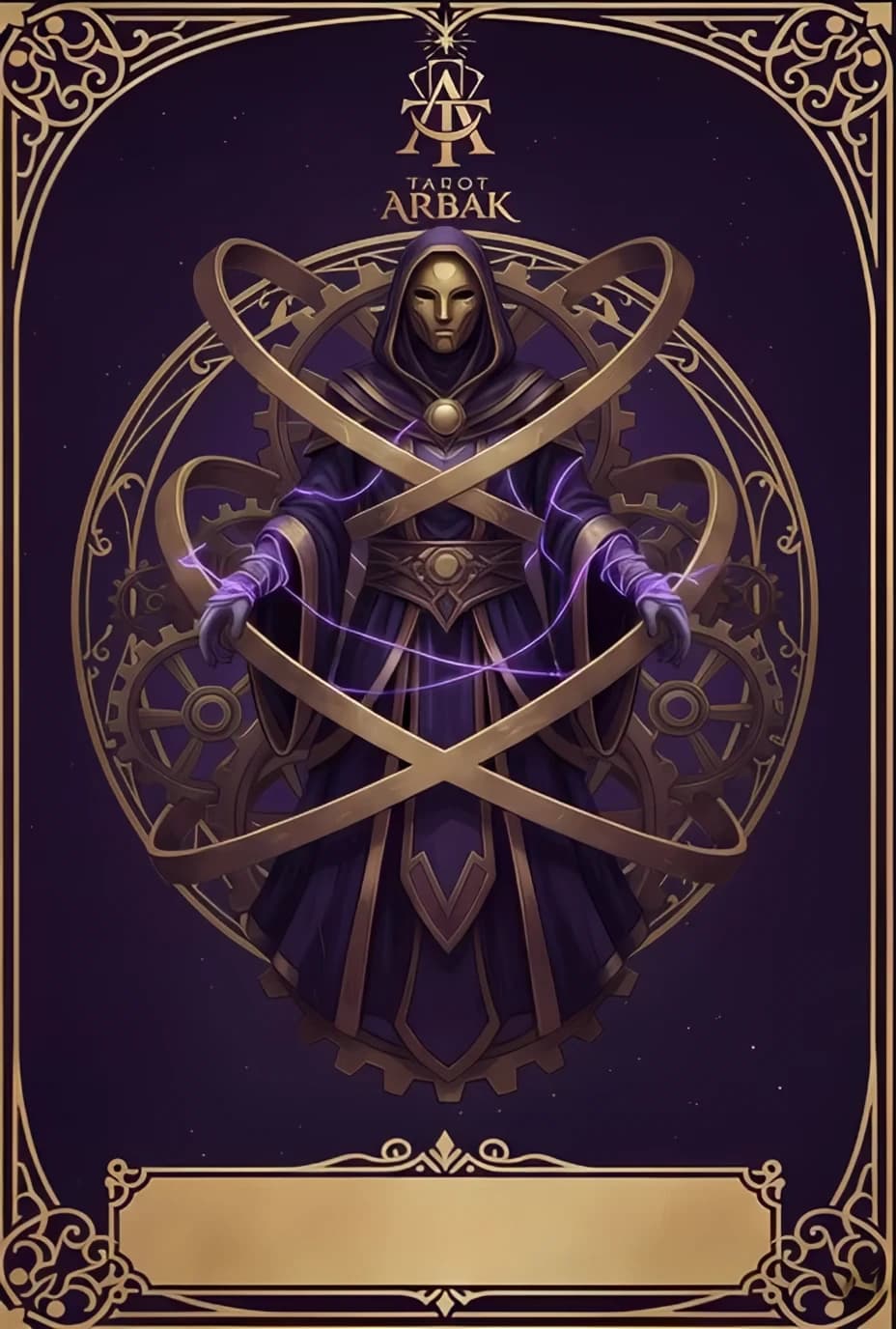
The devil tarot card meaning stands as the fifteenth card of Major Arcana, representing the psychological paradox of chosen bondage and unconscious attachment. Where other cards show external challenges, The Devil illuminates the prisons we build for ourselves through repeated patterns, limiting beliefs, and desires that have become compulsive rather than fulfilling. In Tarot Arbak, this card presents a radical departure from traditional imagery—there is no horned figure with chained captives. Instead, a masked, faceless entity stands surrounded by wheels and intersecting bands, energy circulating in endless loops. This abstraction reveals a profound truth: The Devil is not an external demon that enslaves us, but a system of our own making—thoughts, behaviors, and attachments we maintain while claiming we have no choice.
The chains that bind us most tightly are those we refuse to acknowledge exist.
The number 15 reduces to 6 in numerology, the number of harmony and responsibility—but inverted. This reduction suggests that The Devil represents the shadow side of responsibility: not taking ownership of our choices, thereby surrendering power to unconscious patterns. The card does not condemn; it reveals. It asks uncomfortable questions about what controls us while we pretend to be free. In Tarot Arbak, The Devil teaches that liberation begins not with escaping external forces, but with recognizing our own participation in whatever imprisons us. The wheels behind the masked figure turn because we keep turning them. The energy circulating from hands loops endlessly because we feed the cycle. This is the devil tarot card meaning at its core: seeing that our bondage is maintained by choice, however unconscious that choice may be.
The Devil asks the central question: What controls you while you claim to be free? The card does not say 'you are evil.' It says 'you are bound by what you refuse to acknowledge.' This is not moral judgment but psychological diagnosis—the first step toward liberation is honest recognition of what actually imprisons you.
The Devil Symbolism
The devil tarot card meaning reveals itself through precise visual abstraction. Every element speaks to psychological entrapment rather than physical captivity. Understanding these symbols is essential to grasping the card's profound teaching about self-imposed limitation and the path to genuine freedom.
Tarot Arbak's Devil is deliberately minimalist compared to traditional depictions. The mask, wheels, and intersecting bands create a stark psychological portrait of how we imprison ourselves. Here is the blueprint for understanding internal bondage and recognizing the keys to liberation.
Unlike traditional representations that show external captors with chained victims, Tarot Arbak's Devil presents a single masked figure surrounded by turning wheels and crossed bands. This abstraction teaches that there are no external chains—only internal contracts we have made with ourselves and continue to honor without conscious awareness.
Masked Figure: The Shadow Self
The faceless, masked figure at the card's center represents the shadow self—parts of our psyche we deny, repress, or refuse to acknowledge directly. Unlike Rider-Waite's Baphomet, which portrays an external tempter, Tarot Arbak's figure is ambiguous and anonymous, suggesting that the true source of our bondage cannot be seen directly. The mask symbolizes self-deception: the stories we tell ourselves about why we cannot change, why we must continue in patterns that harm us, why our attachments are necessary and justified.
The masked figure embodies the rationalized self—the part of us that provides elaborate explanations for behaviors we know are destructive. This is not a demon from without, but a defense mechanism from within. The mask does not hide malevolence; it hides uncomfortable truth about our own agency and choice. In Tarot Arbak, The Devil teaches that liberation begins when we stop looking at the mask and start asking what lies behind it.
The mask conceals not evil, but the truth about our own participation in our bondage.
Rotating Wheels: The Cycle of Repetition
The wheels behind the figure represent repetitive cycles—behaviors, thoughts, and situations we recreate endlessly despite claiming to want change. This is Tarot Arbak's crucial innovation over traditional imagery. The wheels turn because we continue the same actions that produce the same results. The devil is not a single temptation but a pattern—the systematic repetition of what has never worked.
These wheels teach that we are trapped not by circumstances but by the patterns we perpetuate. Each turn of the wheel reinforces the pattern, making it seem more inevitable and inescapable with each repetition. The card reveals that breaking free requires not escaping external forces but interrupting the cycle—stopping the wheel by refusing to continue the same choices that keep it turning.
Intersecting Bands: Internal Contracts
The crossed bands surrounding the figure represent internal contracts—agreements we have made with ourselves about what is possible, what we deserve, what we must accept. These are the zihinsel sözleşmeler, the mental contracts that bind us. Unlike physical chains, these bands exist only because we continue to honor them.
The bands are the evolution of traditional chains. Where Rider-Waite shows physical restraints, Tarot Arbak shows psychological ones. No one holds you captive. The moment you say 'I need this,' you bind yourself. The moment you claim 'I have no choice,' you sign the contract. The bands persist not because they are strong but because you continue to believe in their legitimacy.
Purple Energy Loop: Unsatisfied Desire
The energy circulating from the figure's hands represents desire that never fulfills—wanting that perpetuates wanting rather than achieving satisfaction. This energy moves in loops, not toward release or completion. It does not flow upward or outward but circles back on itself endlessly.
This symbol teaches that addiction is not about the object of desire but about the cycle of desire itself. The loop reveals that what we crave cannot satisfy—each cycle of pursuit and temporary relief feeds the next cycle. Breaking free requires not getting what you want but examining what you want and why the wanting never ends.
Absence of Feet: Stasis and Immobility
The figure has no visible feet—a detail that teaches stasis. In The Devil card, there is no progress. No ascent, no descent, no movement at all. The figure remains exactly where it is, frozen in the endless cycle of pattern.
This immobility reveals that bondage is not movement in the wrong direction but absence of movement entirely. The Devil represents not a fall but a stall—not degradation but stagnation. You are not going down; you are going nowhere. Liberation requires not reversing course but actually beginning to move.
No External Chains: Self-Imposed Bondage
Perhaps the most crucial symbol is what the card lacks: physical chains. Traditional depictions show captives in restraints. Tarot Arbak removes them entirely, making explicit what was always implicit. There are no external bonds. The imprisonment is entirely internal—maintained by beliefs, justifications, and the refusal to recognize choice.
No one holds you. You bind yourself the moment you say 'I cannot leave.'
- Symbol 1
Masked figure: shadow self and self-deception
- Symbol 2
Rotating wheels: repetitive cycles and patterns
- Symbol 3
Intersecting bands: internal contracts and limits
- Symbol 4
Purple energy loop: unsatisfied desire
- Symbol 5
Absence of feet: immobility and stasis
- Symbol 6
No external chains: self-imposed bondage
The Devil as Feelings: When Attachment Masquerades as Love
When examining the devil as feelings, this card reveals an emotional landscape characterized by attachment, compulsion, and desire that controls rather than liberates.
Upright: Emotional Bondage
When The Devil appears as feelings upright, the emotional state involves:
- Compulsive attachment — The person feels bound to someone or something not by love but by need. The emotional connection is maintained through fear of loss rather than genuine choice.
- Rationalized desire — There are elaborate justifications for why this attachment is necessary, deserved, or inevitable. The mind provides stories while the emotion remains trapped.
- Unconscious patterns — The feelings recreate old dynamics—attraction to unavailable partners, pursuit of what cannot satisfy, repetition of what has never worked.
- Fear disguised as passion — Intensity of feeling may mask terror of abandonment, unworthiness, or facing oneself without the distraction of obsessive attachment.
Reversed: Liberation or Deeper Denial
When The Devil appears reversed as feelings:
- Breaking free — The person may be recognizing their emotional bondage and beginning to release attachments that have controlled them. Clarity is emerging about what was actually operating beneath surface feelings.
- Denial deepening — Alternatively, bondage may have become so normalized it's invisible. The person claims emotional freedom while remaining trapped in patterns they have justified completely.
- Fear of freedom — There may be terror of actually being emotionally free, leading to retreat back into familiar bondage rather than facing the unknown of genuine autonomy.
- Authentic desire emerging — As compulsive attachment releases, genuine feelings may finally become accessible—what is truly wanted rather than what was neurotically pursued.
The Devil Tarot Advice: Confront What Controls You
When The Devil appears in your reading, the devil tarot advice centers on honest confrontation with what binds you. This is not comfortable work, but it is necessary. The chains that hold you are self-imposed—which means the key to liberation is already in your hands.
The core message is stark: you are not trapped by circumstances but by your own refusal to see clearly. What controls you operates through your denial of it. The moment you acknowledge your bondage, you begin to break it. The Devil does not ask you to judge yourself; it asks you to see yourself accurately.
Specific advice by situation:
-
Feeling trapped — Ask yourself what would actually happen if you left. Often the consequences we fear are exaggerated or imaginary. The prison has open doors; we simply refuse to walk through them.
-
In relationships — Examine whether you stay from love or from fear. Is this connection liberating or imprisoning? The answer may be uncomfortable, but avoidance ensures the pattern continues.
-
Career bondage — Question the story you tell yourself about why you cannot change. Often professional limitation is maintained by belief rather than circumstance. What would you do if you knew you could not fail?
-
Addiction or compulsion — Recognize that the cycle continues because you feed it. Each repetition strengthens the pattern. Breaking free requires interrupting the wheel—refusing one turn at a time.
-
Spiritual growth — Confront what you have denied rather than claiming transcendence. The Shadow controls you precisely because you refuse to see it. Integration, not elimination, is the path to wholeness.
The ultimate Devil advice: Liberation requires no external rescue. The chains exist only because you believe in them. Stop waiting to be saved and start recognizing your own power to choose differently.
The Devil appears not to condemn but to diagnose. It shows you your prison so you can recognize that you hold the key. What binds you is maintained by your participation in it. Withdraw your participation, and the bondage dissolves.
UPRIGHT MEANINGS
General Meaning
When The Devil appears upright, the devil tarot card meaning signals confrontation with self-imposed bondage, unconscious patterns, or attachments that limit your freedom. This may manifest as addiction, toxic relationships, limiting beliefs that have become entrenched, or any situation where you feel trapped while simultaneously refusing to acknowledge your own role in maintaining the pattern. The Devil upright asks uncomfortable questions: What are you enslaved to? What controls you while you pretend you have no choice? What patterns do you recreate endlessly despite conscious desire for change?
The chains that bind us most tightly are those we refuse to acknowledge exist.
This position indicates that bondage operates through unconscious compulsion rather than conscious choice. You may feel that your situation is impossible to change, that you have no options, that your circumstances are externally imposed. The Devil teaches that these feelings are often illusions—self-deceptions that mask the uncomfortable truth that more choice exists than you are willing to recognize. The wheels in the card turn because you keep turning them. The energy loops because you continue feeding it. The bands hold because you honor the internal contracts they represent.
The Devil often appears when Shadow material needs conscious recognition. What you deny within yourself controls you most powerfully. Patterns you refuse to examine operate automatically, creating outcomes you experience as fated but which actually originate in your own psyche. This card invites honest self-examination: what stories do you tell yourself about why you cannot change? What do you defend or deny when questioned about your situation?
Love & Relationships
In love readings, the devil tarot card meaning upright may indicate toxic relationship dynamics, unhealthy attachment, codependency, or patterns that bind rather than liberate. For those in partnerships, this card suggests examining whether connection is based on genuine love or on fear, need, addiction, or compulsive attraction that masquerades as love. One or both partners may feel trapped yet unwilling to acknowledge choice in remaining. The card asks: what truly keeps you connected, and is it love or something else disguised as love?
For those seeking relationships, The Devil may indicate attraction patterns that consistently lead to unhealthy connections, or choosing partners who reinforce limiting beliefs about what you deserve. You may be drawn to intensity, drama, or unavailable precisely because these dynamics feel familiar rather than healthy. The Devil in love asks whether you are pursuing authentic connection or repeating patterns that actually prevent intimacy.
Relationship bondage often involves choice—we stay for reasons we justify while ignoring the truth about why we remain.
This card may also indicate control dynamics, manipulation, or power imbalances that create dependency. The presence of The Devil does not necessarily mean the relationship must end, but it does require honest examination. Are you staying because of love or because of fear—fear of being alone, fear of starting over, fear of facing yourself without the distraction of relationship dynamics?
Career & Money
Professionally, the devil tarot career meanings indicate feeling trapped in work that drains you, toxic workplace dynamics, or professional choices driven by fear and materialism rather than genuine calling. You may feel that your career path has become a prison—work you no longer find meaningful, environments that compromise your values, or situations where you feel powerless to change. The Devil asks whether the golden handcuffs are actually locked: often professional bondage involves more choice than we acknowledge.
This card may indicate patterns of self-sabotage in career—opportunities you avoid because they would require stepping beyond comfort zones, risks you refuse to take despite knowing they might be necessary, or limiting beliefs about what you deserve professionally that you have internalized so completely they feel like facts rather than choices. The wheels turn because you continue making the same choices that produce the same outcomes.
Professional liberation requires recognizing what truly keeps you chained—often internal stories rather than external circumstances.
The Devil can also indicate workplace dynamics characterized by control rather than collaboration, manipulation rather than transparency, or environments where ethical boundaries are routinely crossed. Whether you perpetuate these dynamics or are their victim, the card invites honest assessment of your participation.
REVERSED MEANINGS
General Meaning
The devil tarot card meaning reversed often indicates breaking free from self-imposed bondage, recognizing patterns that have controlled you, or beginning to confront Shadow material. The chains are being removed—not by external rescue but by your own choice to acknowledge truth and claim freedom. This reversal may mark recovery from addiction, liberation from toxic relationships, or breakthrough in seeing what has been operating unconsciously. The wheels stop turning because you stop feeding them. The energy loop opens because you interrupt the pattern. The bands loosen because you question the internal contracts they represent.
However, The Devil reversed can also indicate bondage so complete it has become invisible. Denial may be so deep that you cannot even recognize what binds you, or freedom may be offered that you refuse to claim despite clearly having the option to leave. The shadow of liberation is believing yourself free while actually remaining trapped in patterns you have justified so thoroughly they no longer appear as patterns at all.
Are you waking up to what has controlled you, or sinking deeper into unconsciousness about your own patterns?
This reversal calls for honest assessment. Are you actually breaking free, or have you simply adjusted to your bondage and convinced yourself it's acceptable? True liberation requires acknowledging what was previously denied—not just claiming to be free while maintaining the same patterns.
Love & Relationships
In love readings, the devil tarot card meaning reversed often indicates liberation from toxic relationship patterns, recognition of unhealthy dynamics, or the courage to leave situations that have become bondage. You may be seeing a relationship clearly for the first time, acknowledging control or manipulation you previously denied, or breaking free from attachment that no longer serves. For singles, The Devil reversed may suggest breaking old attraction patterns and learning to choose based on authentic values rather than compulsive familiarity.
Alternatively, this reversal may indicate denial about relationship problems that has deepened rather than lessened. Freedom may be available but refused, or you may have adjusted to toxicity and convinced yourself that it's actually normal or acceptable. The shadow of liberation is believing yourself free while actually remaining trapped in patterns you have justified so thoroughly they no longer appear problematic at all.
Relationship bondage often persists not because we cannot leave but because we will not see what keeps us connected.
This card calls for honest examination: are you genuinely breaking free, or have you simply resigned yourself to staying and redefined your resignation as acceptance?
Career & Money
Professionally, the devil tarot career meanings reversed suggest liberation from work situations that felt like bondage, recognition of professional patterns that have limited you, or the courage to leave toxic workplaces or career paths that no longer align with your values. You may be breaking free from golden handcuffs, refusing to compromise integrity for material security, or finally seeing workplace dynamics clearly for the first time.
Alternatively, this reversal may indicate continued professional bondage that you're not yet ready to address, or freedom you're refusing to claim due to fear disguised as necessity. The shadow of liberation is believing yourself free while actually remaining trapped in patterns you have justified so thoroughly they no longer appear as choices but as inevitable conditions.
Professional freedom requires recognizing what truly keeps you chained—often internal stories rather than external circumstances.
This card calls for honest assessment: are you genuinely making different choices, or have you simply adjusted to your bondage and convinced yourself it's acceptable?
Frequently Asked Questions
Maintain the Crystalline Infrastructure
Tarot Arbak exists beyond ads and algorithms. Your contribution ensures the permanence of the Logos.